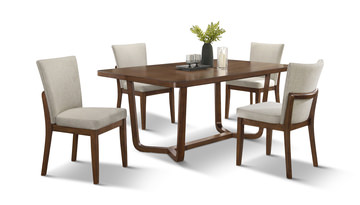
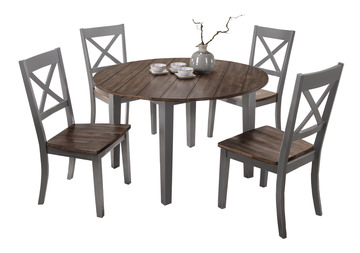
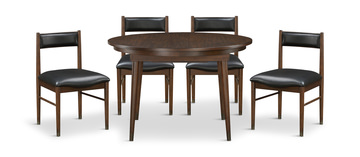
Round vs. Rectangular Dining Table: How to Choose Based on Your Room, Not Just Your Style
May 2026

Most people choose a dining table by imagining how it will look in their room. That instinct isn’t wrong, but it often leads to a table that looks right but functions poorly. This dining table shape guide is built around a more reliable starting point: your room’s footprint.
The dining room shape determines which table shape will feel natural, support easy movement and actually seat the people you need. Style matters — but it works best after you’ve let the room make the first decision.
Should I Get a Round or Rectangular Dining Table?
The round vs. rectangular dining table decision depends primarily on the shape of your room. A square room and a rectangular room have fundamentally different proportions, and a table that fits one can feel awkward or oversize in the other.
The short framework: match the table shape to the room shape, then adjust for seating needs and style. In most cases, a rectangular room calls for a rectangular table and a square room calls for a round one. But there are counterintuitive exceptions worth knowing.
Start With Your Room’s Footprint
Before measuring tables, measure your dining space. Allow 36 inches between the table edge and any wall or obstruction so chairs can pull out and people can circulate. In tighter rooms, 30 inches is workable but snug.
A 10-by-14-foot rectangular room leaves a usable table zone of roughly 44 by 80 inches — a proportion that naturally suits a standard rectangular table.
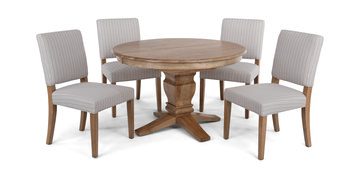
When comparing a square dining room table vs. round, the difference becomes clear in a 12-by-12-foot room: a 48-to-54-inch round table fits that zone cleanly, while a rectangular table tends to feel directional in a space that has no natural long axis.
What Dining Table Shape Is Best for a Small Dining Room?
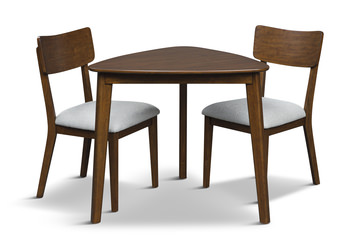
When it comes to the best dining table shape for a small room, round almost always outperforms rectangular. A round table has no corners, so traffic flows around it more naturally and the room reads as less crowded.
A 42-inch round seats four and fits rooms as compact as 9 by 9 feet. A comparable rectangular four-top — typically 36 by 60 inches — requires more clearance because the long ends project further into the room.
In an open-plan layout where the dining area is defined by furniture rather than walls, a round table anchors a corner or nook more naturally than a rectangular one, which tends to want a room to itself.
Does a Round Table Seat More People Than a Rectangular One?
No — rectangular tables seat more people per square foot, particularly for larger groups. The table below shows how the two shapes compare at common sizes.
42–48” Round Table
Seats: 4 - 5
Best for: Small rooms, everyday households
60” Round Table
Seats: 6
Best for: Square rooms with moderate space
72” Round Table
Seats: 8
Best for: Large rooms; conversation priority
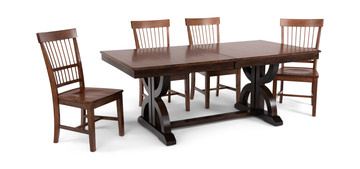
60” Rectangular Table
Seats: 6
Best for: Standard rectangular rooms
72” Rectangular Table
Seats: 6 - 8
Best for: Most common dining room size
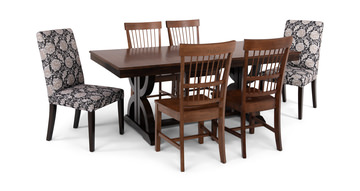
72”+ with leaves
Seats: 10 - 12
Best for: Households that host large gatherings
Round tables work well for households of two to five. Once you need to seat eight or more, a rectangular table with leaves is almost always the more practical choice.
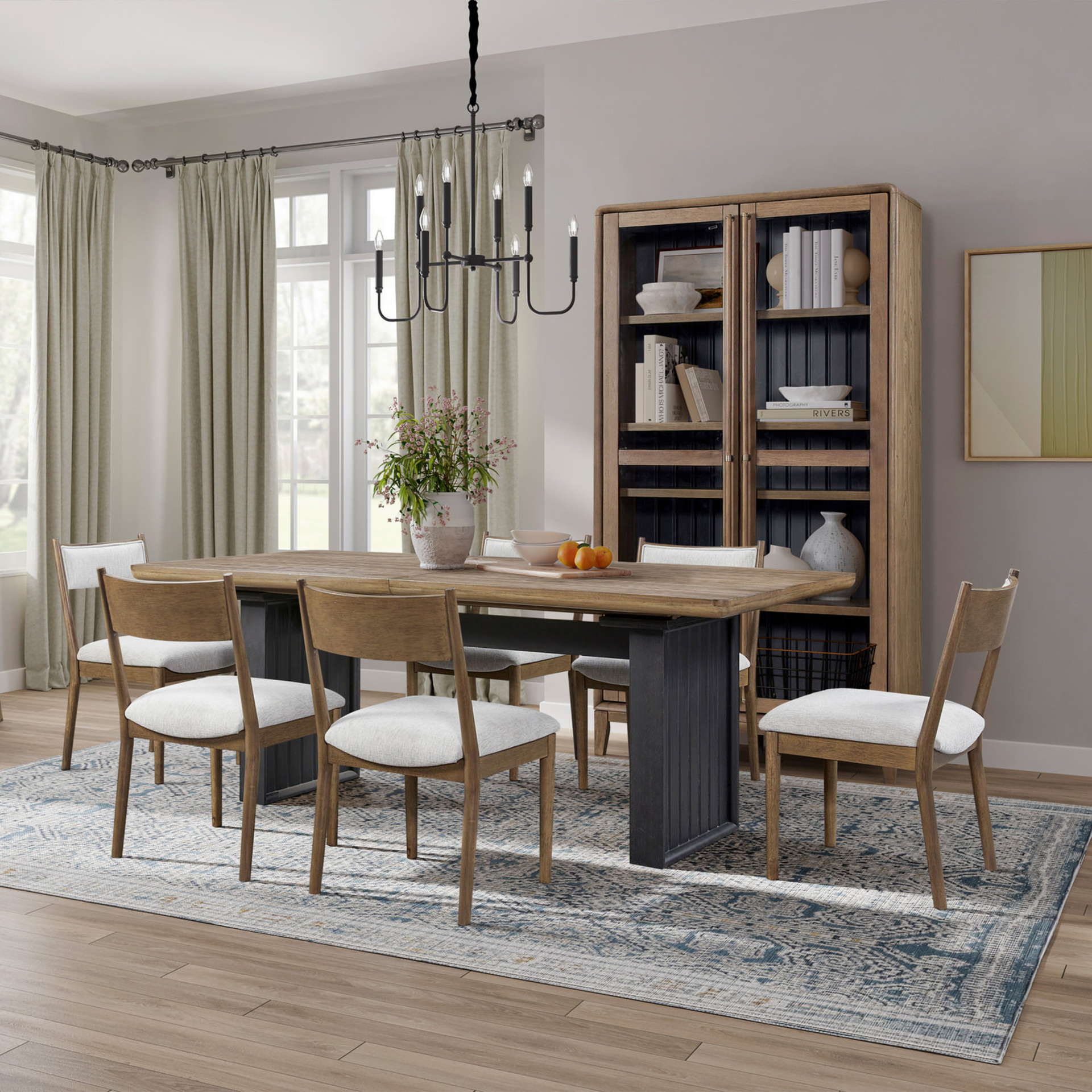
What Shape Dining Table Is Best for Conversation?
Round tables are generally better for conversation. Every seat faces the center equally, there is no head of the table and everyone within reach of a 48-to-54-inch diameter can make easy eye contact without turning.
At a rectangular table, conversation naturally segments by proximity — people talk to the person across from them or beside them. The two ends of a long table are effectively in separate conversations. This isn’t a flaw so much as a characteristic. For dinner parties with eight or more people, that segmentation can feel natural. For everyday family meals where you want one shared conversation, round wins.
The Counterintuitive Cases
A round table in a long rectangular room can work well at one end, especially when the dining space blends into a living area. It softens the tunnel effect of the long walls and signals a distinct zone without reinforcing the room’s linear geometry.
A rectangular table in a square room isn’t automatically wrong, but it requires restraint. A 60-inch table in a 12-by-12 room can work if clearances hold. A 72-inch or longer table in the same room will feel like it’s straining against the walls even when the numbers technically clear.
Oval Tables: A Strong Middle-Ground Option
If the round-versus-rectangular decision feels like a compromise either way, oval is worth serious consideration. An oval table captures the softness of a round table while seating more people and fitting a rectangular room more naturally.
A 72-by-42-inch oval seats six comfortably in a 10-by-14-foot room, with rounded ends that ease traffic flow and a longer dimension that gives you rectangular seating capacity without sharp geometry.
The main tradeoff: oval tables are harder to find with leaf extensions, and they can look awkward in a perfectly square room where neither axis dominates.
How to Make the Final Call
Once you have your room dimensions and clearance math, the decision usually narrows itself.
Square room under 12 by 12 feet: round table, 42 to 48 inches in diameter.
Rectangular room 10 by 12 or larger: rectangular table, scaled to available length.
Open-plan or blended spaces: round or oval for informal zones; rectangular for defined formal dining.
Households of two to four: round handles daily use with less visual bulk.
Households that frequently host six or more: rectangular with leaves gives the most flexibility.
Style, finish and material all matter — but they are easier decisions once the shape is settled. A table that fits your room will feel right almost immediately.
When you’re ready to go deeper on dimensions, seating counts and chair pairing, our dining room buying guide covers full sizing charts and what to look for once you’ve chosen your shape. You can also visit Hennen’s Furniture to see round, rectangular and oval tables in person before making your final decision.