
Outdoor Furniture Buying Guide: How to Choose the Right Patio Furniture for Your Space

Patio furniture decisions involve space, climate, personal style and how you actually use the outdoor area. There’s no one best setup. Use this outdoor furniture buying guide to help determine what’s ideal for your unique household.
How Do I Choose Patio Furniture for My Space?
Start with how you use the space, not with what furniture you think you need. A household that primarily eats outside needs a patio dining set as the anchor piece. One that uses the patio for relaxing and gathering may want a patio sofa or lounge arrangement first, with dining secondary. Many patios support both — a dining zone on one end and a seating area on the other — and planning for that from the start is easier than trying to fit pieces together later.
Available space shapes the options. A small deck can hold a bistro table and two lounge chairs or a modest dining set, but not both comfortably. A large patio has room for distinct zones — dining, lounging, shade coverage — and the furniture choices for each zone can be made somewhat independently. Measuring the usable square footage before shopping, and sketching out where each piece would go, prevents the most common mistake: a beautiful set that leaves no room to move.
Style and comfort are personal, but material choice is where practical judgment matters most in a climate like central Minnesota’s. The same patio furniture that looks and feels right in July needs to handle freeze-thaw cycles, seasonal storage logistics, and years of sun and moisture. Those considerations are crucial when deciding how to choose patio furniture.
What Are the Main Categories of Patio Furniture?
Each type of furnishingserves a different function in an outdoor space, and most patios draw from several.
Patio Dining Sets
A patio dining set is the most common anchor piece for an outdoor space, but it doesn’t have to be purchased as a set. Mixing a table from one manufacturer with chairs from another is a practical option when you want a specific shape or size that doesn’t come paired with the seating you want. The main consideration when mixing is frame material — matching aluminum to aluminum, or steel to steel, keeps the look coherent and avoids finish inconsistencies.
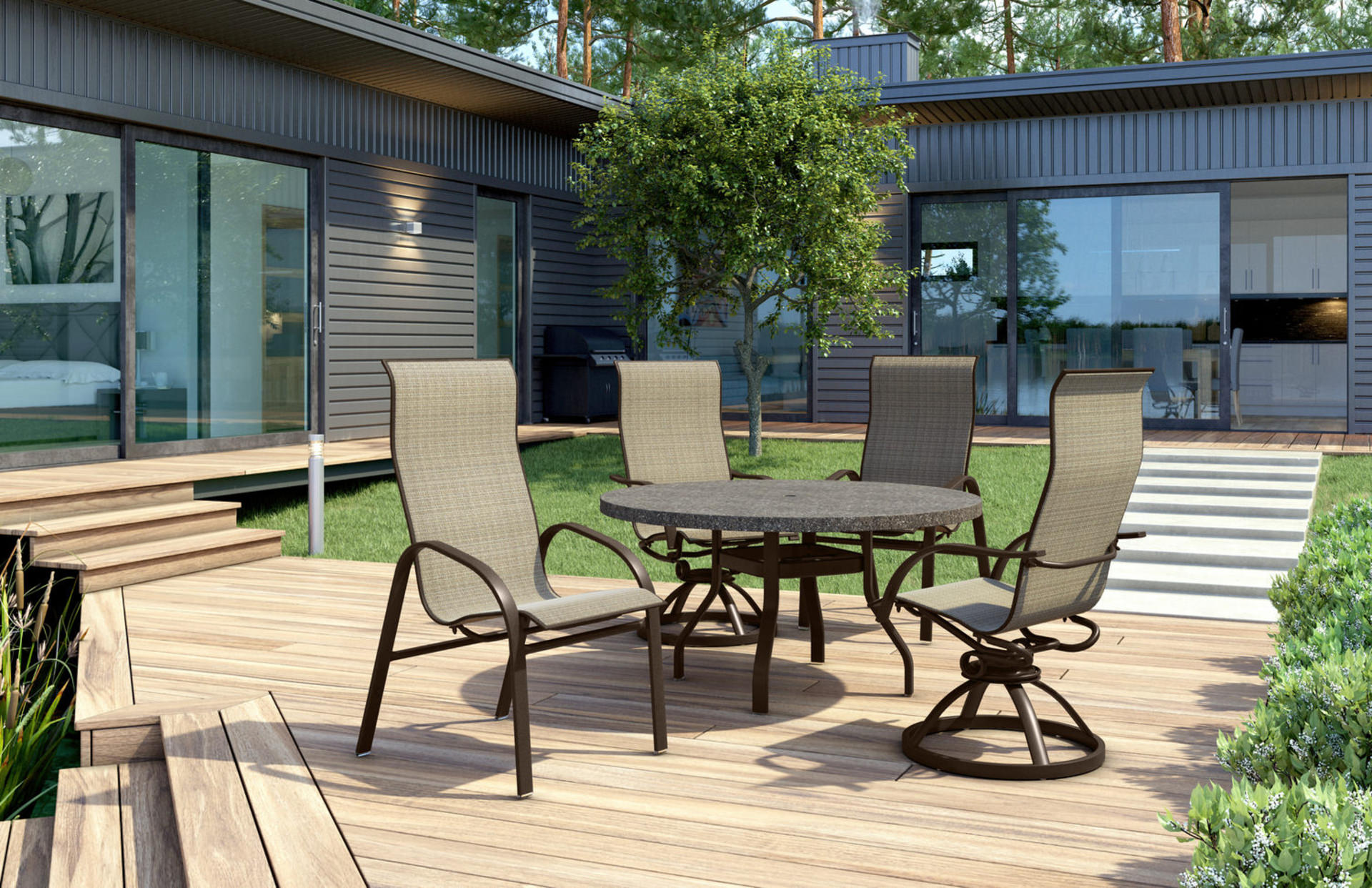
Table shape is worth thinking through. Round and square tables suit compact or square patios and feel more conversational. Rectangular tables accommodate more guests and sit better on longer, narrower decks. Material options include powder-coated aluminum, steel, teak, HDPE or poly-wood and composite tops — each with different maintenance requirements and different looks. The right choice depends as much on the aesthetic you’re after as on durability considerations.
Outdoor Sofas and Sectionals
Outdoor sofas, sectionals, and chat sets serve different space sizes and social configurations. Hennen’s patio sofas, chairs, and lounges collection covers all three formats.
A conversation set — typically a sofa, two chairs, and a coffee table — is structured and symmetrical, suited to mid-size patios. A sectional seats more people in a relaxed arrangement and works better for larger spaces or households that entertain often. A chat set, two chairs and a side table, is the most compact option: good for a balcony, a tight corner, or a secondary seating zone alongside a dining area.
Cushion fabric grade is worth attention here. Solution-dyed acrylic has color created within the weave fiber rather than applied to the surface, which means it resists fading. Polyester cushions cost less but show UV degradation faster in direct sun. If the seating area gets full afternoon exposure, the upgrade is worth it.
Patio Lounge Chairs and Chaise Lounges
Patio lounge chairs and chaise lounges are not interchangeable. A lounge chair is upright with some recline, suited to conversation areas. A chaise lounge is designed with an adjustable back for the ability to lay nearly flat or at various reclined positions, making it the right choice for poolside use or anywhere the goal is to stretch out rather than sit up.
Look for multi-position adjustability on chaise lounges — a fixed recline angle limits how the piece can be used over time. Sling-style chairs, which stretch fabric across a frame without a cushion, dry quickly and require no seasonal storage. Deep-seat chairs with cushions are more comfortable for extended sitting but need those cushions brought in or covered when not in use.
Patio Umbrellas
Shade is commonly underplanned in an outdoor space. Hennen’s carries market and cantilever styles, and the right choice depends on how your space is arranged.
A market umbrella can mount through the center of a dining table and is the most common style. A cantilever umbrella mounts to a side base and extends over the space, free standing, independent of the furniture, making it more flexible — it can shade a dining set, a lounge area, or any configuration without a center-pole table. Cantilevers require a heavier base and cost more, but they can serve any setup.
Canopy fabric matters as much as the frame. Solution-dyed acrylic holds its color significantly longer than standard polyester in direct sun — the same logic that applies to cushion fabric applies here. Most market umbrellas also include a tilt mechanism; crank-tilt styles are easier to adjust mid-afternoon without getting up.
Outdoor Accessories
Rugs, side tables, planters, and lighting are what turn a collection of furniture into a finished space. Hennen’s outdoor accessories are also the most budget-flexible category — easy to add one piece at a time as the space evolves.
An outdoor rug defines a seating or dining zone on a large patio the way an area rug anchors a living room. Size it so the front legs of the furniture rest on the rug — too small a rug leaves everything floating. Side tables give every guest somewhere to set a drink, which sounds like a minor detail until it’s missing. Planters add vertical interest and soften hard edges. String lights or lanterns extend usable hours into the evening without permanent electrical work.
How Much Space Do You Need for Patio Furniture?
Plan on at least 3 feet of clearance on all sides of a dining table for comfortable chair movement. The quick-reference table below gives starting points by space type.
| Space Type | Recommended Table Size | Seats |
|---|---|---|
| Small patio or balcony | 36–42” round or square | 2–4 |
| Mid-size deck | 48–60” round or 60–72” rectangle | 4–6 |
| Large deck or patio | 72–84”+ rectangle or oval | 6–8+ |
For umbrella sizing, the canopy should extend at least 2 feet beyond the table on each side. A 48-inch round table needs a 9-foot umbrella at minimum. Chaise lounges run 72 to 80 inches long — confirm the length fits with 24 inches of clearance behind each one for traffic flow.
Extension tables are worth considering if your guest count varies. They seat a smaller everyday group and expand for entertaining without requiring a separate set.
Which Outdoor Furniture Materials Last the Longest?
Material choice is the most consequential decision in a patio furniture guide for Minnesota. It determines maintenance requirements, longevity, and whether the furniture makes it through freeze-thaw cycles without cracking, warping, or rusting.
| Material | Durability | Maintenance | Minnesota Winters |
|---|---|---|---|
| Powder-coated aluminum | Excellent | Wipe clean; no rust | Can stay out; cover recommended |
| All-weather wicker (resin) | Very good | Hose down; UV stable | Can stay out; cover recommended |
| Teak | Excellent | Seal annually or let silver naturally | Can stay out; cover recommended |
| HDPE | Excellent | Can be hosed down | Can stay out; cover recommended |
| Steel | Good | Watch for chips; touch up to prevent rust | Store indoors or cover tightly |
| Softwood (pine, spruce) | Fair | Seal and paint regularly | Store indoors; not ideal for MN |
| Standard wicker / rattan | Poor outdoors | Keep dry | Must store indoors |
Aluminum, all-weather wicker, and teak are the three materials best suited to Minnesota winters. They can remain on the patio through the season with a cover and handle what the climate delivers. HDPE and poly-wood are also excellent choices. They can be hosed down, and can stay out. Steel and softwood require more seasonal attention but can work. Standard natural material wicker and rattan belong indoors.
How Do I Protect Outdoor Furniture from the Elements?
A short end-of-season routine in October extends the life of every piece significantly. Cushions should be stored indoors or in a deck box — not left under a furniture cover all winter. Moisture trapped under a cover causes mildew in a single season. Clean cushions before storing: mild soap and water, rinsed and fully dried before they are put away.
Hard surfaces — frames, tabletops, umbrella poles — benefit from a wipe-down before covering. For aluminum, warm water and mild dish soap is enough. For teak, apply teak oil in the fall to maintain the warm brown tone, or leave it to develop the natural silver patina over time.
Look for furniture covers with vents, which prevent moisture buildup during temperature swings. Weight the covers or use ties — a loose cover in a November wind can do more damage than no cover at all.
Frequently Asked Questions
What outdoor furniture works best in Minnesota weather?
Powder-coated aluminum, all-weather wicker, and teak handle Minnesota freeze-thaw cycles best. All three can stay on the patio through the season with appropriate covers and require minimal year-round maintenance.
How do I choose a patio umbrella?
Size the canopy to extend at about 2 feet beyond your table on each side. Choose a market umbrella for a center-pole dining table or a cantilever for flexible coverage over any arrangement. Specify solution-dyed acrylic canopy fabric for better fade resistance, and match base weight to canopy size — at least 50 pounds for a 9-foot canopy.
What is the most durable outdoor furniture material?
Powder-coated aluminum and teak are the most durable options for outdoor use in Minnesota. Aluminum requires virtually no maintenance and won’t rust. Teak is naturally dense and weather-resistant; oil it to maintain its color or leave it to silver naturally.
What accessories do I need to complete a patio space?
An outdoor rug sized to anchor the furniture grouping, a side table, and lighting for evening use are the three additions that do the most work. Planters and decorative pieces layer in after the functional pieces are in place.
How do I protect outdoor furniture from the elements?
Store cushions indoors before winter. Cover hard furniture with vented covers secured against wind. Clean all surfaces before covering. Seal teak in the fall to maintain its color, or allow it to silver naturally.
Where to Start With Your Patio
On a small patio or balcony, a 4-person dining set and a pair of lounge chairs or a chat set will cover most of what the space can do — add an umbrella and a rug once the seating is right. A mid-size deck has room for a full dining set and a separate conversation or lounge zone; keeping both in the same material family makes the space feel considered rather than assembled. For a large patio, planning in zones from the start — a dining area, a lounge area, a shade plan that serves both — is easier than fitting pieces in later.
In any case, the right outdoor furniture is the combination that fits how you actually use the space. Style, comfort and personal preference matter as much as any spec in this patio furniture guide.
Browse Hennen’s full outdoor furniture collection to see current patio dining sets, sofas, lounge chairs, umbrellas, and accessories.