The Biggest Reason Home Offices Stop Working (It’s Not the Desk)
May 2026

When a home office fails to work efficiently, people tend to blame the desk. Most of the time, however, the real problem is storage.
Why Is It Hard to Focus in My Home Office?
Clutter is not only visually unappealing. It’s also the primary reason home offices become hard to work in. When paper stacks up, cords tangle across the desk and work items blur together with personal belongings, the brain registers disorder even when you’re trying to ignore it. Add the time lost hunting for misplaced documents or accessories, and the productivity cost compounds over a workday.
The typical response is to blame the desk — too small, wrong height, wrong placement. But in many cases, the desk is fine. What’s missing is somewhere for things to go. A home office without adequate storage will defeat any desk you put in it.
What Storage Do I Need in a Home Office?
A general “more storage” approach rarely fixes the right problem. There are four common storage failures that make home offices unworkable, and each one has a specific furniture solution. Identifying which one applies to your space is where to start.
No Dedicated Paper or Filing System
Without a fixed home for documents, paper migrates to the nearest flat surface. That surface is almost always the desk. Once it’s there, it multiplies — current projects, bills, forms waiting to be handled, things you meant to file last week.
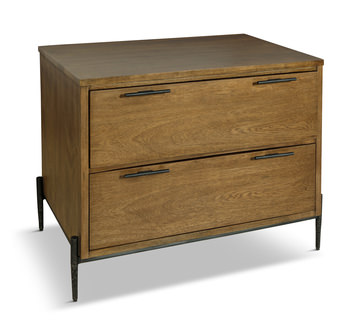
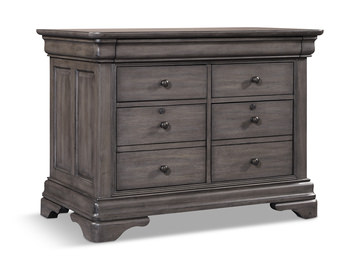
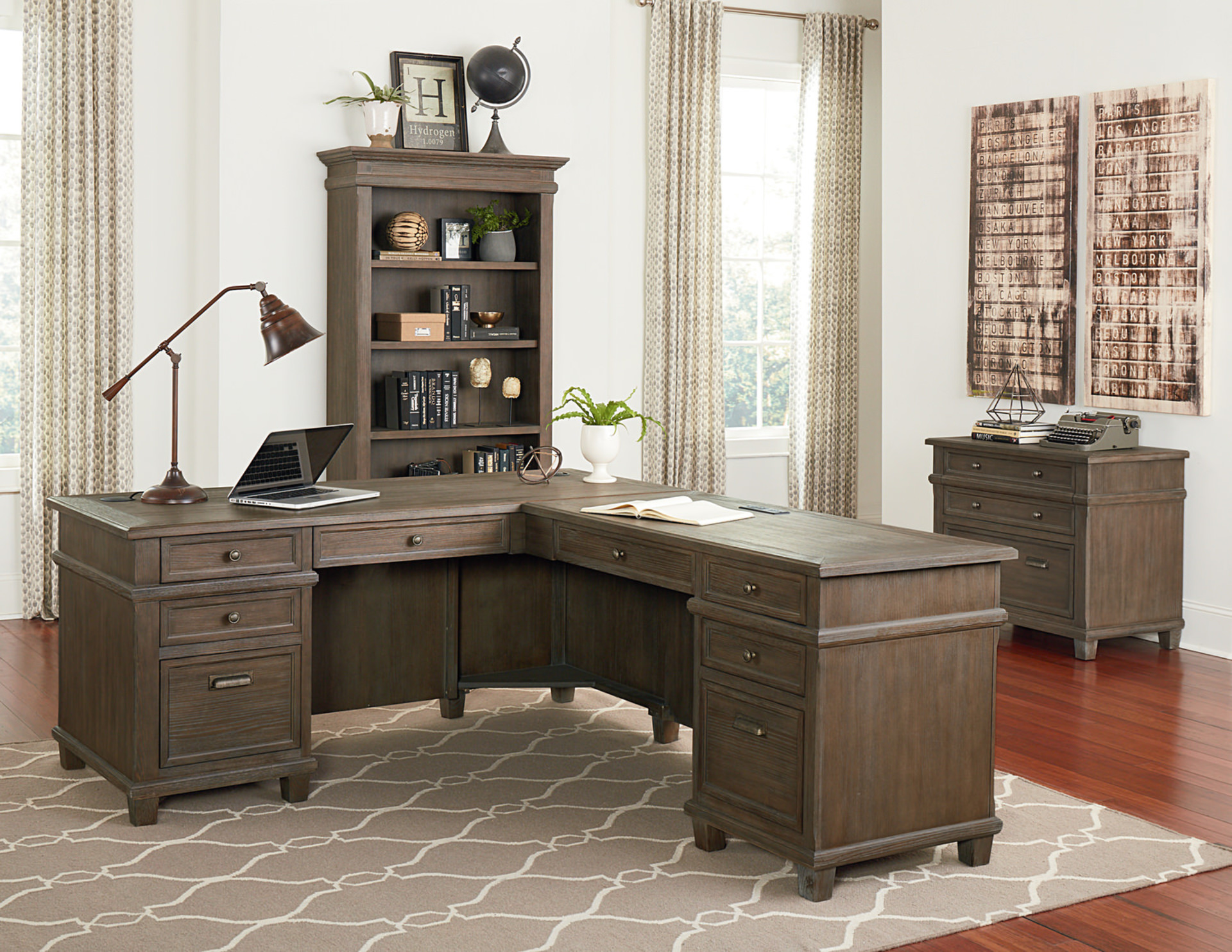
The solution is a lateral file cabinet or a credenza with built-in file drawers. These aren’t interchangeable with desktop organizers or trays. Surface-level paper management keeps paper on the surface. A proper filing system removes it from sight entirely, which is the only arrangement that actually clears the desk.
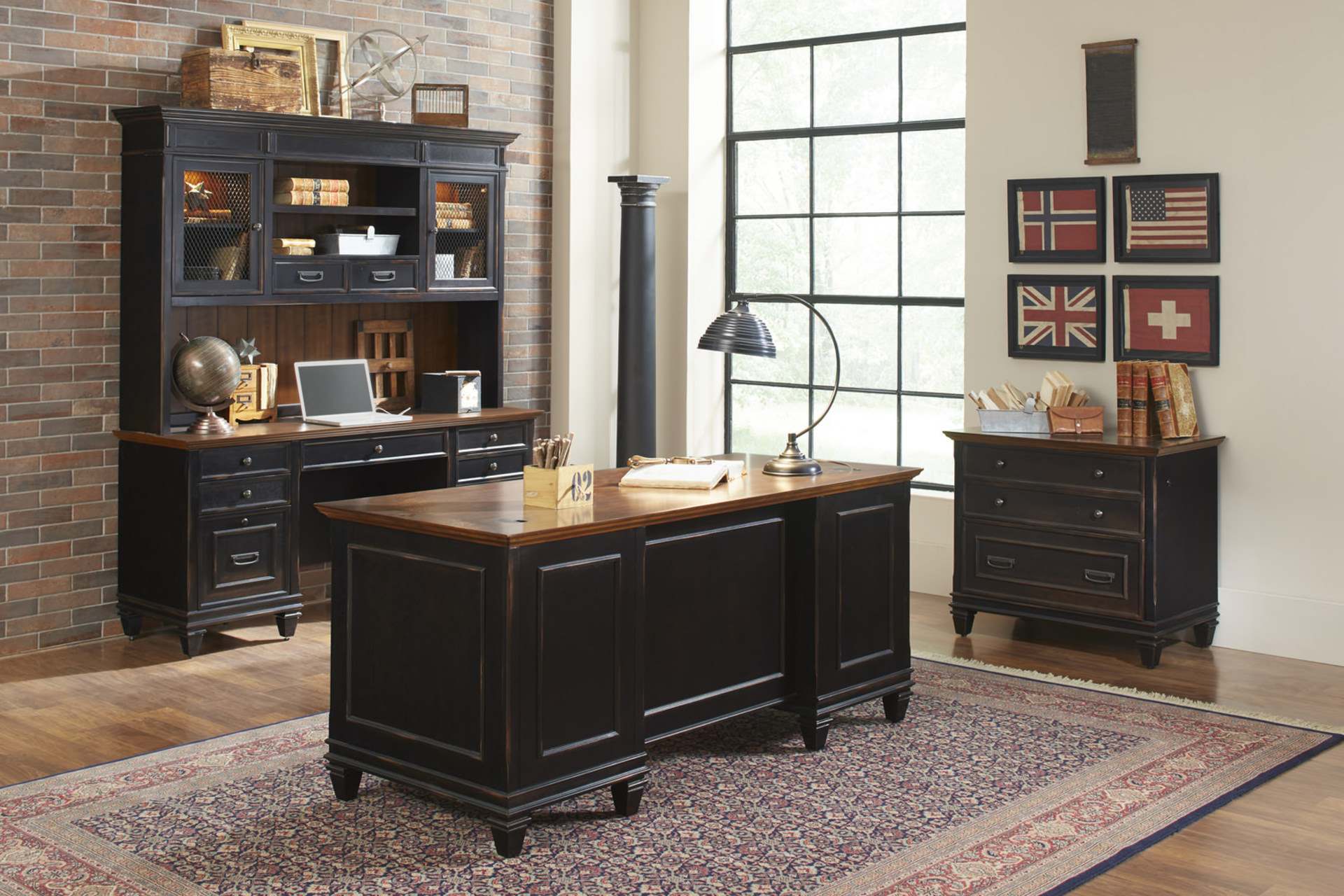
Surface Clutter With Nowhere to Go
Books, binders, equipment, reference materials, personal items that migrated in from other rooms — if the desk is the only horizontal surface in the office, everything ends up on it. The problem isn’t that you’re disorganized. It’s that the room has no capacity.
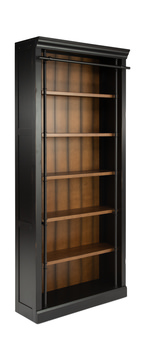
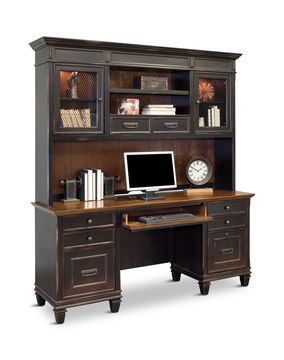
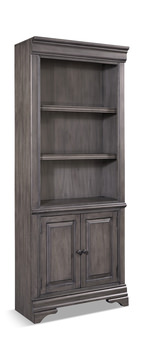
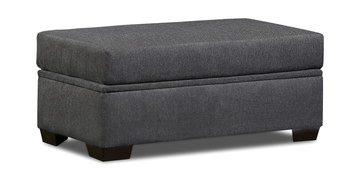
Bookcases, hutches, storage ottomans and wall shelving add that capacity without requiring a bigger footprint. A single bookcase alongside a desk dramatically changes what the desk has to absorb. A hutch mounted above the work surface creates vertical storage in the same square footage. These are home office organization storage solutions that expand what the room can hold, not just shuffle what’s already there.
Cords and Tech Accessories Without a Home
Tech clutter accumulates in a pattern: a charger on the desk, a second one on the floor, headphones draped over the monitor, a power strip visible from across the room. It’s visually loud in a way ordinary clutter isn’t, and it tends to grow faster than it gets addressed.
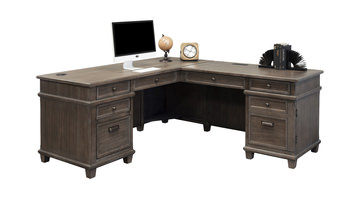
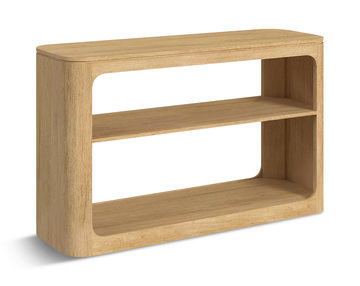
Desks with built-in cable management channels route cords out of sight from the moment you set up. A console table positioned behind the primary desk gives tech accessories a dedicated surface with space to conceal the strip and cords underneath. Media storage units with integrated cord routing work for offices that double as media spaces. The key is giving this category its own furniture, not improvising.
Work and Personal Items Mixed Together
When the home office holds kids’ crafts, mail that belongs in the kitchen and sports gear that should be in the garage, the problem isn’t the desk. It’s that work items and everything else share the same space with no physical separation and no clear boundary between them.
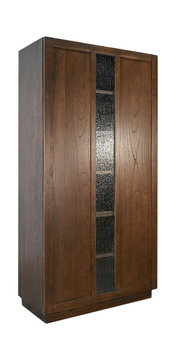
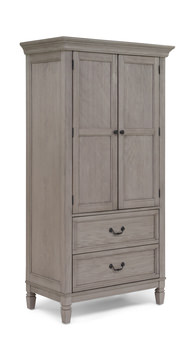
Closed storage — cabinets, armoires, storage ottomans with lids — creates that separation. Giving non-work items their own closed storage moves them out of the work zone and keeps the desk doing one job. Open shelving consolidates but doesn’t conceal. For mixed-use home offices, closed office storage furniture is the more effective choice.
Frequently Asked Questions
How do I organize a home office with excessive clutter?
Start by identifying what has no home. Clutter is almost always the result of items that have no designated storage, not a failure to put things away. Add the right furniture for each category — filing for paper, shelving or a hutch for general clutter, closed storage for items that shouldn’t be visible — before reorganizing what you already have.
How do I make my home office feel more professional?
Closed storage does more for a room’s professional appearance than any single piece of furniture. When clutter is behind cabinet doors and cords are managed out of sight, the space reads as intentional regardless of the desk you’re using. Surface clutter and visible cord tangles undercut otherwise good setups.
Can a credenza replace a filing cabinet?
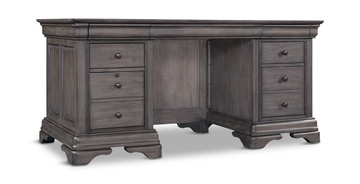
Yes, if it includes file drawers. Many credenzas combine file storage with general cabinet space and a work surface, making them efficient single-piece home office storage solutions for rooms where a separate filing cabinet would crowd the layout.
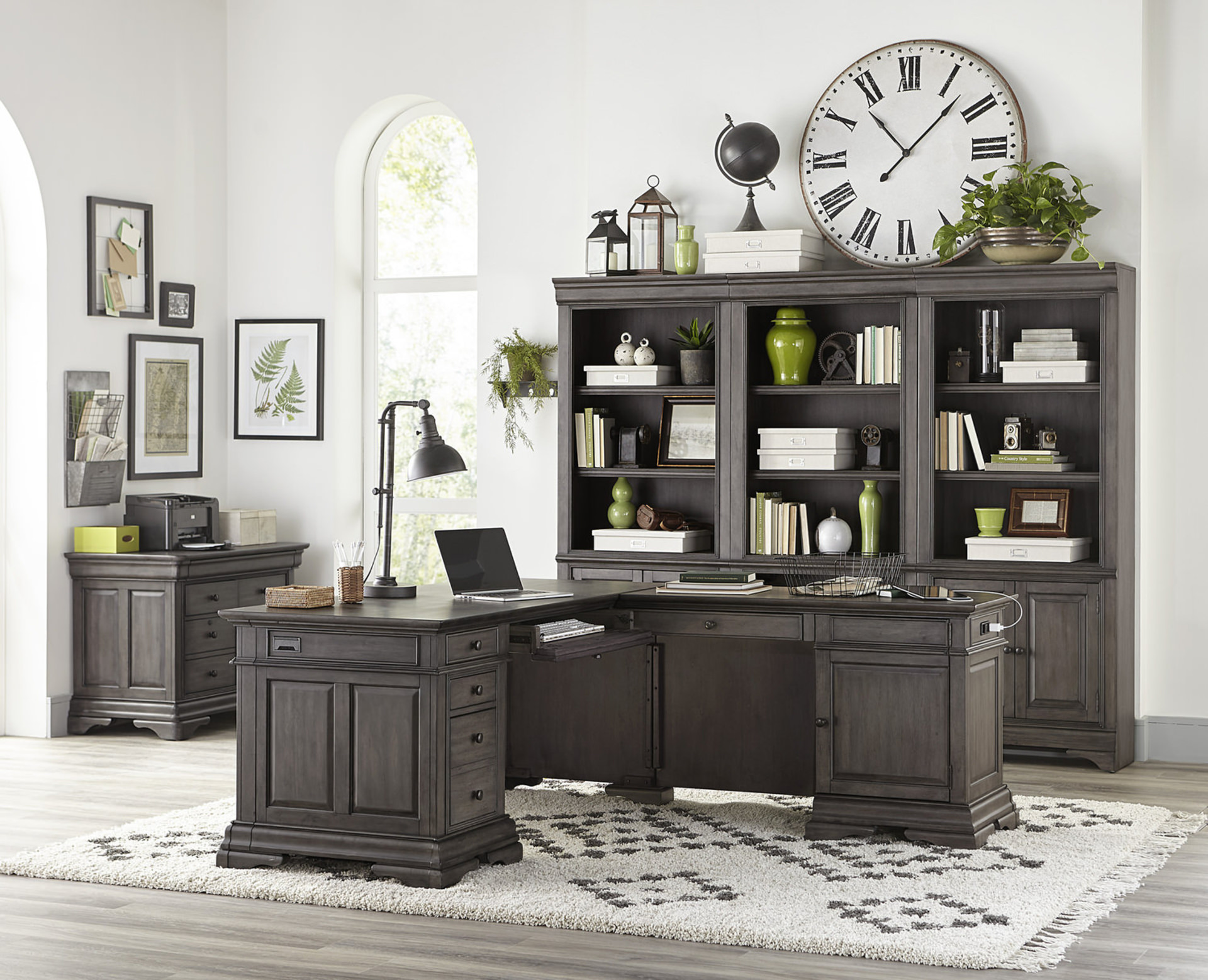
Fixing Your Home Office: Match the Problem to the Solution
Most home office dysfunction comes down to one of these major storage problems. Start by identifying which applies to your space.
- Surface clutter is constant but you have wall space — Add a bookcase or wall shelving before buying a bigger desk.
- Paper and documents pile up on every surface — A lateral file or credenza with file drawers solves this; a desktop organizer does not.
- Cords and tech accessories have no fixed home — A desk with built-in cable management, or a console table behind the desk, eliminates the tangle for good.
- Work and personal items mix together constantly — Closed storage — cabinets, storage ottomans — creates the separation a drawer or bin cannot.
- The space feels chaotic despite having good furniture — Storage is almost certainly the issue. Audit what has no home before buying anything new.
Getting the storage right doesn’t require starting over. In most cases, one or two targeted pieces — a lateral file, a bookcase, a desk with cable management — close the gap. When you’re ready to put together the full picture, Hennen’s home office buying guide covers every category, from desk selection to seating to storage, in a single reference.