Area Rug Trends Worth Buying Into (and a Few Worth Skipping)
May 2026
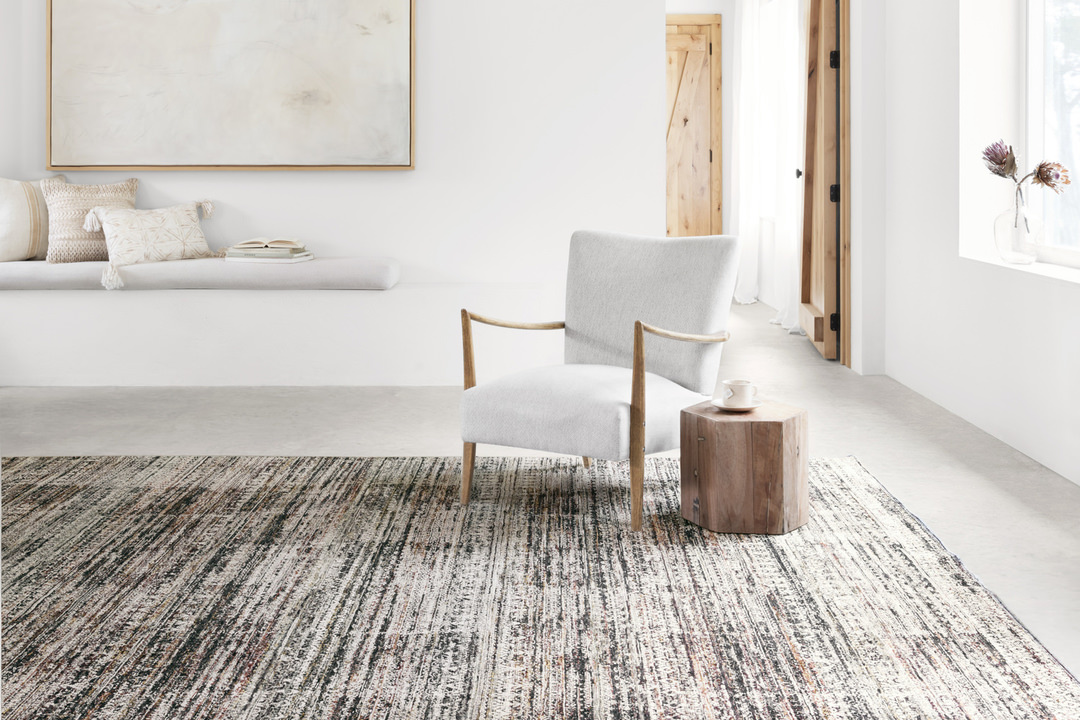
Many currently popular area rug styles are worth the investment. However, some tend to look dated before you’ve gotten your money’s worth.
What Area Rug Styles Are Trending Right Now?
The dominant area rug trends right now are natural fiber textures, earth tone palettes, low-pile vintage and distressed designs, bold geometrics and globally influenced flatweaves. Natural fibers and earth tones have the strongest staying power. Bold geometrics and novelty prints carry more risk.
The rug design trends worth buying share three qualities: they work across multiple interior styles, they’re grounded in a longer design tradition, and they function as a backdrop rather than a focal point competing with everything around them. Apply that test and most trends sort themselves.
Natural Fiber & Jute Textures
Jute, sisal and seagrass rugs, as well as area rugs inspired by these natural looks, have moved from accent pieces to primary floor coverings, and they’re not leaving. Texture adds visual depth, the neutral palette integrates across styles from coastal to contemporary to traditional, and the material signals sustainability.
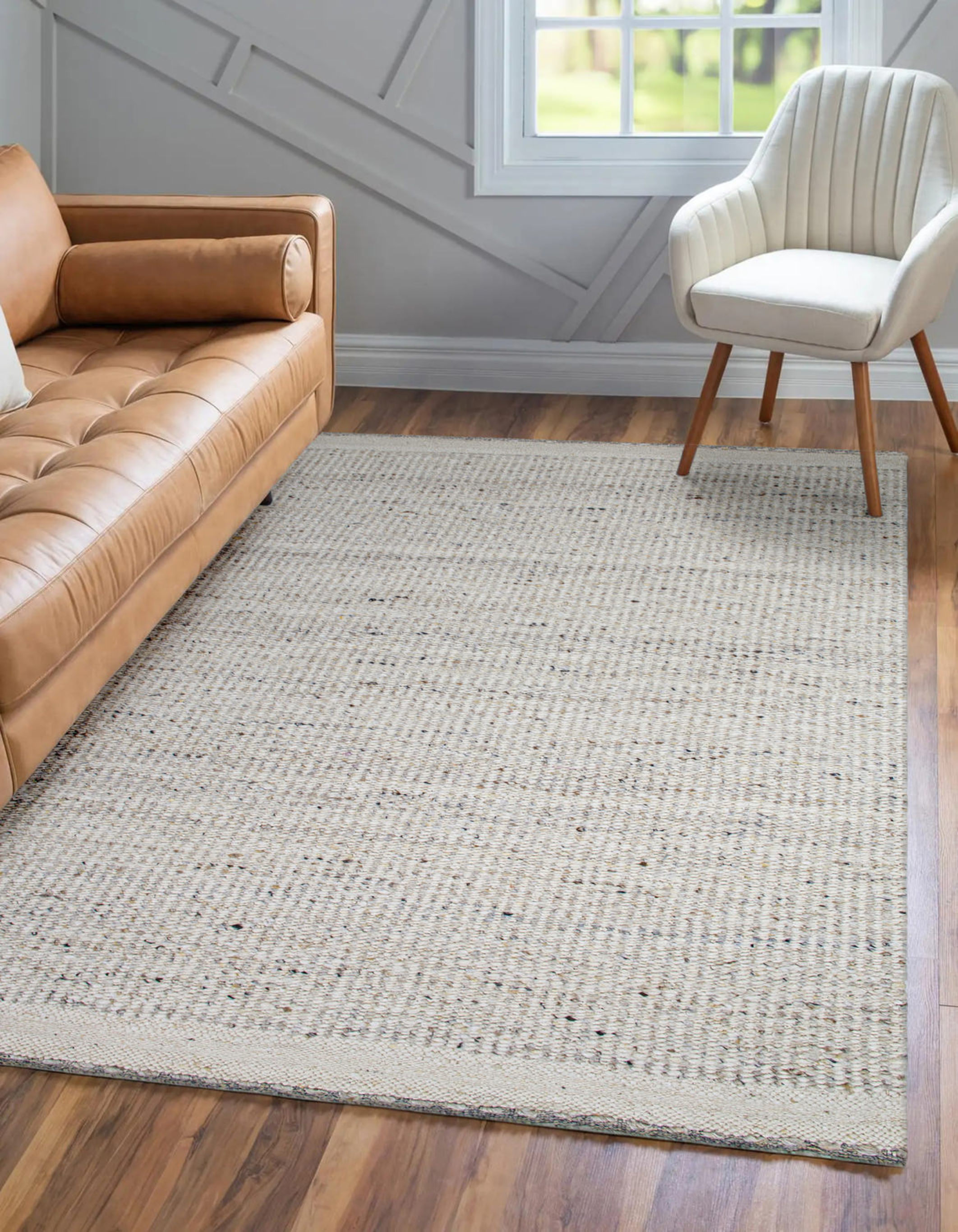
Natural fiber rugs have been a staple in European and coastal American interiors for decades. The practical trade-off: jute and sisal are rougher underfoot than wool or synthetics, making them better suited to low-traffic walkways and dining areas than bedroom floors.
Trend Verdict: Buy It. Strong staying power, genuine versatility and a design history that predates the current trend cycle.
Earth Tone Palettes
Terracotta, warm sand, clay, ochre and olive have dominated interior design for several years, and the rug market has followed. Earth tones are the neutral palette of the natural world; they don’t date the way saturated or fashion-forward colors do, and they add warmth without clashing with furniture or artwork.
The risk is in specific shades. Warm tan and clay are long-cycle colors. Anything marketed as “color of the year” carries more expiration risk. Lean toward muted, dusty versions rather than saturated ones.
Trend Verdict: Buy It. One of the safest trend investments in rugs right now, particularly in muted versions of warm neutrals.
Vintage & Distressed Styles
The vintage and distressed rug trend has strong staying power because it’s rooted in actual antique rug traditions: Persian, Turkish and Moroccan designs in circulation for over a century. A low-pile, slightly faded, geometrically patterned rug in warm tones looks appropriate in nearly any interior because it borrows credibility from a long design lineage.
Quality matters more than trend timing. Some lower-end pieces look artificially aged rather than genuinely worn. Focus on hand-knotted or hand-tufted construction, or look for rugs with clear provenance.
Trend Verdict: Buy It. Rooted in a design tradition with over a century of staying power.
Bold Geometric Patterns
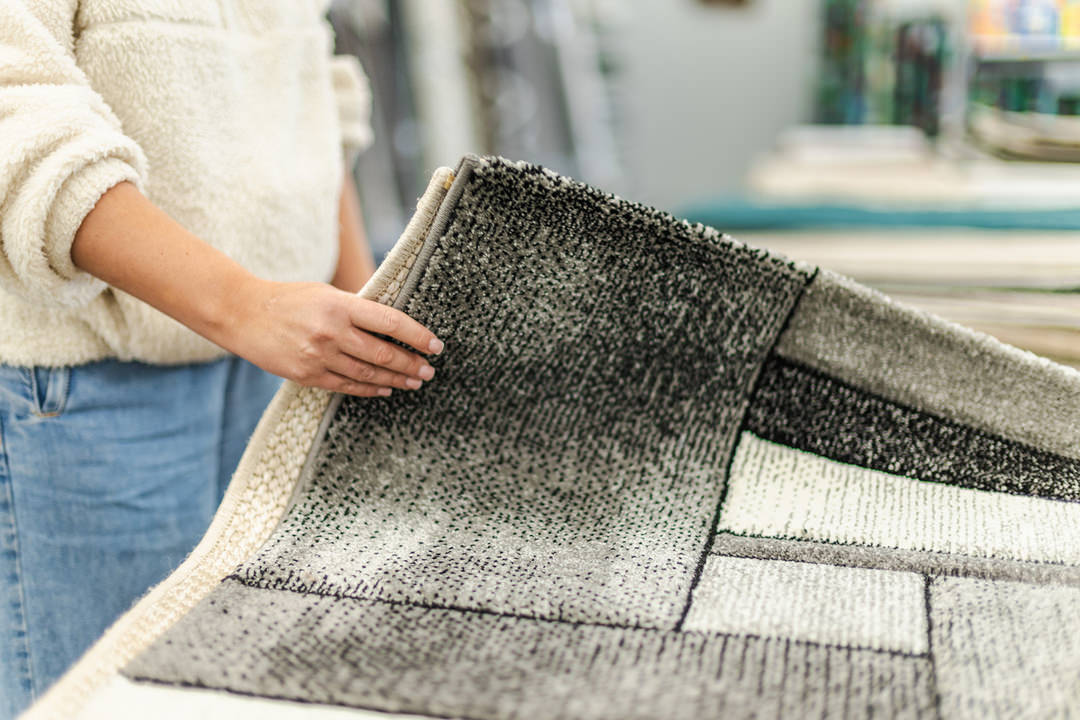
Geometric rugs occupy a wide spectrum, and staying power depends on scale and tone. Large-scale, high-contrast patterns—oversized diamonds, graphic triangles, wide stripes in black and white—are the most trend-dependent and hardest to restyle around as the interior evolves.
Smaller-scale geometric patterns in muted tones are a different case. They function more like a texture than a pattern and carry far less expiration risk. Globally influenced geometric traditions such as Berber diamond patterns and Scandinavian grid motifs have long design histories that anchor them beyond the current trend moment.
Trend Verdict: Proceed with Caution. Subtle geometrics in neutral tones have staying power; large-scale, high-contrast designs carry more risk.
Global & Flatweave Designs
Kilim-style flatweaves, Dhurrie rugs and other globally influenced woven designs are practical—low pile, reversible, easy to clean—and the visual vocabulary of traditional weaving is deep enough that these rugs don’t belong to a single trend moment. They represent some of the best area rug styles for shoppers who want cultural grounding alongside function.
The weaker end of this trend is novelty graphic flatweaves built around a visual concept rather than a weaving tradition. Those read as themed rather than designed.
Trend Verdict: Buy It. Traditional flatweave construction with genuine cultural roots is a strong long-term choice. Novelty graphic versions carry more risk.
What Rug Patterns Are Timeless vs. Trendy?
Learn more about common rug categories against their staying-power profile.
Natural fiber / jute — Strong staying power. The texture and visual depth work across styles.
Earth tones (muted) — Strong staying power. Long-cycle colors; avoid highly specific trend shades.
Vintage / distressed Persian or Turkish — Strong staying power. Century-long design tradition; quality matters.
Traditional flatweave (kilim, dhurrie) — Strong staying power. Functional and culturally grounded.
Subtle geometric (small scale, neutral) — Moderate–Strong staying power. Functions as texture; low expiration risk.
Bold geometric (large scale, high contrast) — Moderate staying power. Powerful but harder to restyle around.
Novelty or graphic prints — Weak staying power. Themed rather than designed; short useful life.
Fashion-forward color palettes — Weak staying power. "Color of the year" choices date quickly.
Patterns with a design history age well. Those built around a current moment tend to look dated within a few years.
How to Buy a Trend Rug Without Regretting It
The risk isn’t the trend itself; it’s overcommitting. Three applications where trendy vs timeless decisions carry lower stakes:
Guest rooms. Guests aren’t there long enough for the rug to feel like an imposition, and the room doesn’t require the longevity of a living room.
Home offices. A more expressive rug fits the personal nature of the space and is easy to replace as tastes evolve.
Layered applications. A smaller trend rug layered over a neutral jute or sisal base can be swapped out without replacing the foundational piece.
The higher the traffic and the more central the room, the more the rug should lean toward staying power over novelty.
Frequently Asked Questions
Are vintage and distressed rugs still in style?
Yes. Vintage and distressed rugs draw from Persian, Turkish and Moroccan traditions that predate modern interior design entirely. They’re still in style because they were always in style; the current trend moment just increased their market visibility.
Should I buy a trend rug or stick with something timeless?
It depends on placement. In a primary living space, lean toward staying power. In a guest room, office or layered application, a trend rug is a reasonable lower-stakes choice.
How do I know if a rug trend will last?
Ask three questions: Does it work across multiple interior styles? Is it rooted in a longer design tradition? Will it read as a backdrop rather than compete with the room? A rug that clears all three is worth buying regardless of where it sits in the trend cycle.
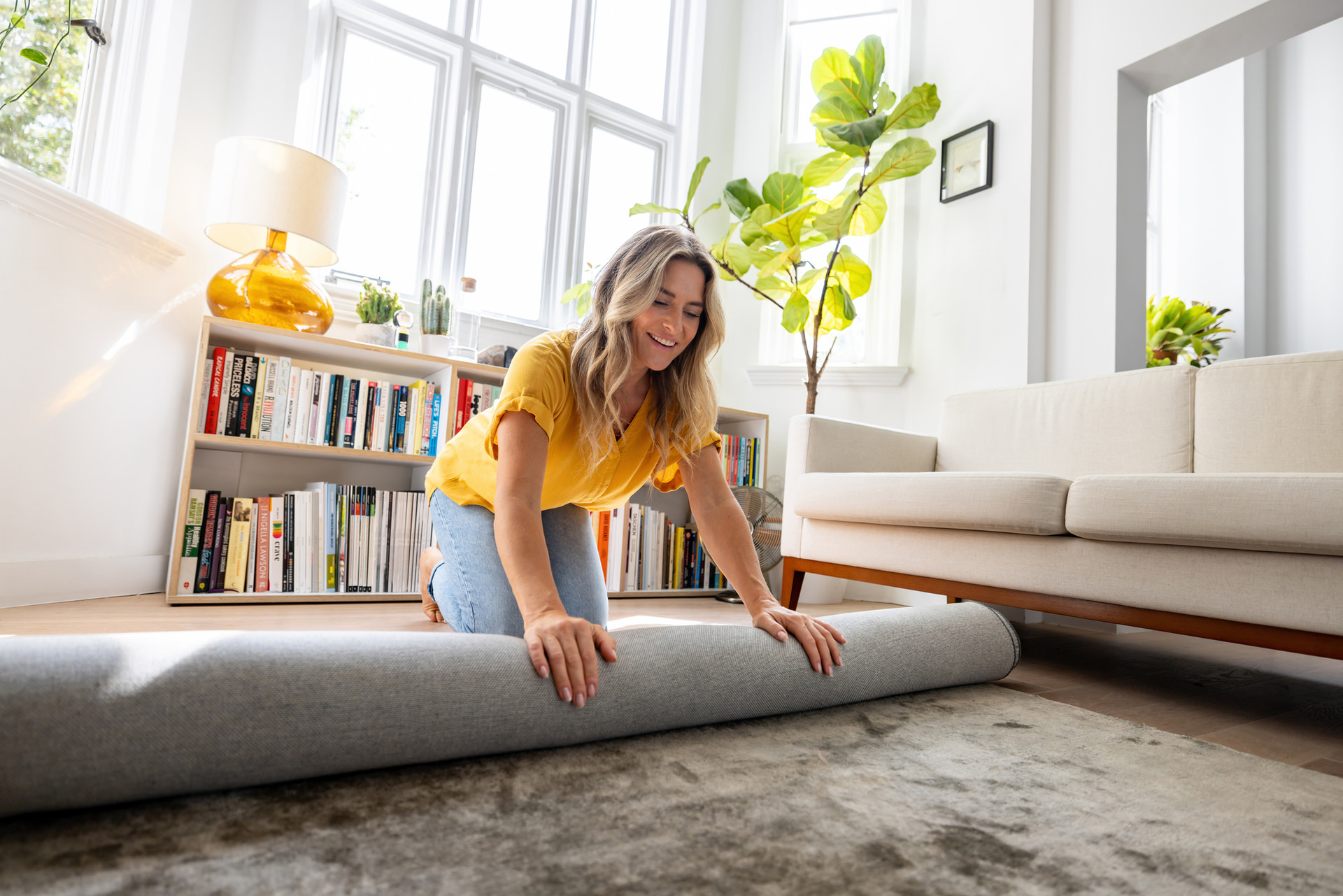
Buying the Right Rug for Your Room and Risk Tolerance
Use the guide below to match your situation to the right approach.
- High-traffic primary space (living room, main bedroom) — Prioritize staying power: natural fiber, muted earth tones, or a quality vintage-distressed piece.
- Secondary or formal space used occasionally — More latitude for trend rugs; staying power still preferable over novelty.
- Guest room or home office — Lower-commitment trend rugs are appropriate and easy to replace as tastes change.
- Layered application over a neutral base — Treat the trend rug as replaceable. The layer underneath is the investment.
- Small or awkward room — Favor round or smaller-format rugs in neutral tones. Avoid bold patterns that fight the proportions.
- Drawn to a trend but unsure it will last — Buy it for a guest room or office, not a living room. Or wait a year and see if you still want it.
When you’re ready to narrow down size and placement, Hennen’s area rug size guide covers dimensions for every room type, and the area rug placement guide walks through living rooms, dining rooms and bedrooms in detail.