Full-Grain, Top-Grain: What Leather Furniture Labels Actually Mean
July 2026
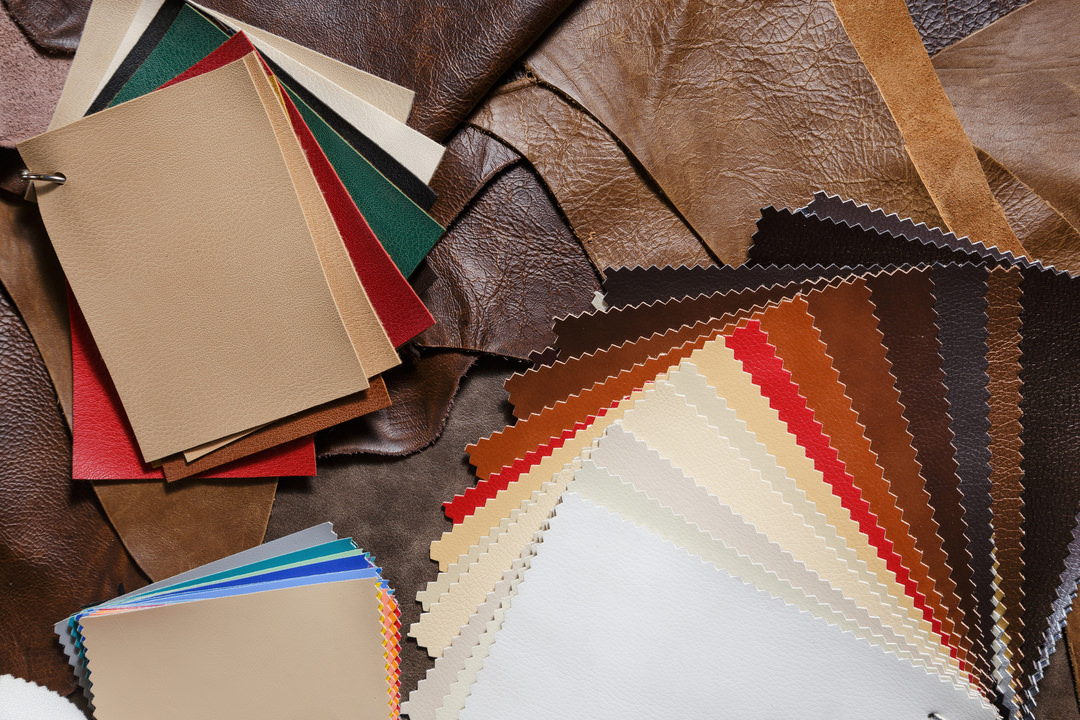
Walk into any furniture showroom and you'll see leather sofas labeled with terms like "full-grain," "top-grain," "genuine leather," or "leather match." They all sound premium. They aren't all the same product, and they aren't all going to last the same number of years in your living room. Understanding full grain vs top grain leather, and how those grades compare to the other types of leather furniture on the market, is the difference between shopping with confidence and simply hoping the tag tells the whole story.
This leather furniture quality guide breaks down what each label actually means. Leather quality comes down to one main factor: how much of the hide's natural surface remains, and how much has been sanded, buffed, or reconstructed to hide imperfections. The less a hide is altered, the stronger, more breathable, and longer-lasting it tends to be. That's the quality hierarchy this guide walks through, from the best hides down to the leather-look alternatives.
What Is the Difference Between Full-Grain and Top-Grain Leather?
Full-grain leather uses the entire outermost layer of the hide, left essentially untouched. Top-grain leather starts as the same top layer but has been sanded or buffed to remove scars, bites, and other natural marks, then often refinished with a protective coating. In short: full-grain keeps the hide's original surface and character; top-grain smooths that surface out for a more uniform look.
That distinction affects everything from feel to longevity, so it's worth understanding each grade on its own.
1. Full-Grain Leather
What it is: The uppermost layer of the hide, used as-is, with only the hair removed.
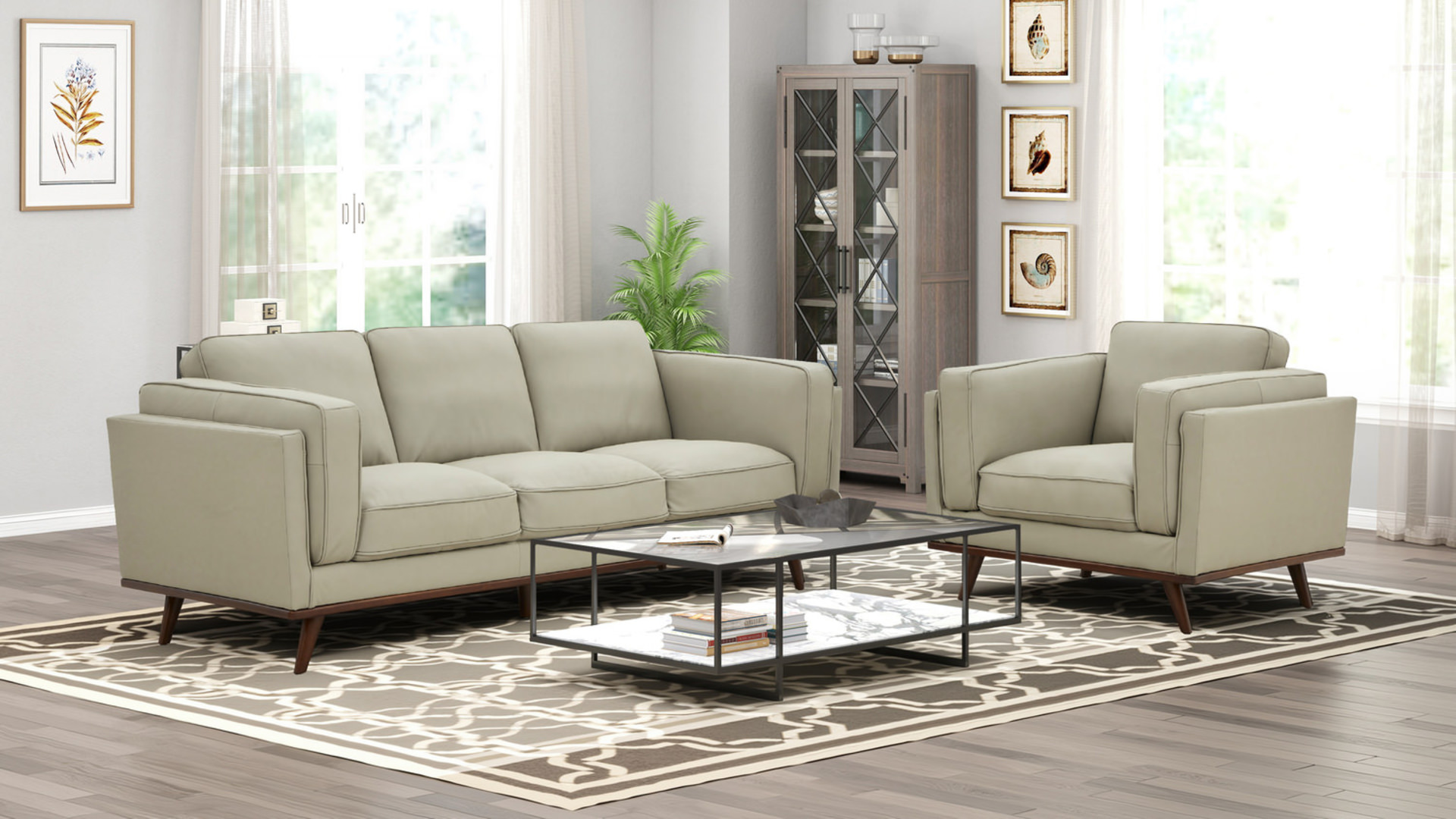
Full-grain leather isn't sanded, buffed, or corrected, so it keeps every natural characteristic of the animal's skin — subtle wrinkles, small scars, and variations in texture. That intact fiber structure is also what makes it the strongest and most durable leather grade available. Only about 10% of hides are pristine enough to skip mechanical correction and qualify as full-grain, which is a big part of why it commands the highest price.
Because the surface hasn't been altered, full-grain leather is also more breathable, so it tends to feel more comfortable across seasons than heavily coated alternatives. However, due to the lack of protective coating, full-grain leather is the most easily scratched leather and tends to develop character flaws, as well as changes to color and sheen, over time. Given the high price tag and long-term variations, our experts at Hennen’s select only top-grain and other types of leather furniture to provide you with the best livable solutions.
2. Top-Grain Leather
What it is: The same top layer of hide as full-grain, but sanded or buffed to remove imperfections, then typically refinished with a protective topcoat.
Top-grain is the layer directly below the surface irregularities of full-grain, made more consistent through light processing. It's the industry standard for leather furniture specifically because it strikes a good balance between durability, appearance, and ease of maintenance. The finish resists stains and everyday scuffs well, and the surface looks uniform right out of the box. It’s an appealing option if you'd rather not see every mark a hide picked up over its lifetime.
The trade-off is a thinner, slightly less rugged material than full-grain, and a subtler patina over time since the surface has already been altered once. It's still genuine, full-thickness leather — just with a smoother finish applied.
One caution: "top-grain" doesn't automatically mean high quality. The term can be a euphemism for simply "not full-grain," and even "full top grain" gets used loosely enough that it's worth asking a retailer directly what layer and finish you're actually getting.
3. Corrected-Grain Leather
What it is: Lower-grade or heavily marked hides that have been sanded smooth and embossed with an artificial grain pattern to look like natural leather.
Corrected-grain leather starts from hides with more visible flaws — the kind that wouldn't pass as full- or top-grain — and compensates by sanding away the original texture, then pressing a uniform pattern back in and applying heavier pigment or coating. The result can look convincing, but that thicker synthetic layer changes how the material feels and ages: it's less breathable, shows wear at contact points like armrests sooner, and won't develop the deep patina that full- or top-grain leather does.
It's genuine leather in the sense that it comes from a real hide, so it's a step above split or bonded leather. For budget-conscious purchases, rental properties, or furniture you expect to replace in a few years, it can be a reasonable compromise — just go in with realistic expectations about lifespan.
4. Understanding Leather "Splits"
- No natural grain. "Split" leather comes from the lower layers of the hide, so it doesn't contain any of the original grain found in higher-quality leathers.
- Often finished to mimic higher grades. Manufacturers can apply an artificial top coat to seal the surface, giving split leather an appearance similar to "Top Grain" leather — even though the underlying material is different.
- Less durable over time. Split leather doesn't offer the same wear-and-tear strength as "Full Grain" or "Top Grain" leathers, so it does not tend to hold up as well to daily use.
- The source of suede. Split leather is commonly used to create "Suede," since its softer, unfinished texture is well suited to that look and feel.
5. Faux/Vegan Leather
What it is: A leather-look material made without any animal hide, typically polyurethane (PU) or PVC applied over a fabric backing.
Faux leather (also marketed as vegan leather or "leather match" in some upholstery) has come a long way in appearance and softness, and it's a legitimate choice for buyers prioritizing cost, easy cleaning, or an animal-free material. It resists stains well initially and comes in a wide range of colors and textures.
It's worth distinguishing faux leather from bonded leather, which is often confused with it. Bonded leather is made from shredded scraps of real leather fiber mixed with adhesive and coated in polyurethane — it contains some genuine leather but behaves more like a coated composite. Both bonded leather and faux leather can look good at first, but they generally won't age as gracefully as full- or top-grain leather under daily use, and both are prone to peeling, cracking, or flaking within just a few years in high-contact spots like seats and armrests.
Which Type of Leather Furniture Lasts the Longest?
Full-grain leather lasts the longest by a wide margin, thanks to its intact fiber structure and minimal processing — well-maintained pieces can last decades and often get passed down as heirloom furniture. Top-grain leather is a strong second, especially for households that want a more polished, consistent look with less maintenance. Corrected-grain, bonded, and faux leathers have progressively shorter realistic lifespans, generally measured in a few years rather than decades under regular use.
Is Top-Grain Leather Worth the Price?
For most households, yes. Top-grain leather is the industry standard for good reason — it delivers most of the durability and authentic feel of full-grain leather, with a finish that's more forgiving of everyday spills and scuffs. Full-grain leather isn't an "upgrade" so much as a different choice: it offers a rawer, more natural look that develops character over time, which some homeowners specifically want. If you're drawn to that natural patina and don't mind a surface that shows its history, full-grain is a great fit. If you're outfitting a busy family room where easy cleanup and consistent appearance matter more than a raw, natural look, top-grain often hits the sweet spot.
Quality and Value Comparison
| Leather Type | Durability | Natural Look/Patina | Maintenance | Relative Cost |
| Full-Grain | Excellent (decades) | Highest — develops rich patina | Low, but needs conditioning | Highest |
| Top-Grain | Very good | Good — subtler patina | Low, stain-resistant finish | High |
| Corrected-Grain | Fair (several years) | Uniform, artificial texture | Moderate | Moderate |
| Split Leather | Lower (couple years) | Thin- often coated or embossed | Moderate- less stain resistant | Low |
| Faux/Vegan & Bonded | Lower (a few years) | Uniform, no true patina | Low, but prone to peeling/cracking | Lowest |
Shop Leather Furniture at Hennen Furniture
Understanding these grades is the first step — the next is seeing and feeling the difference in person. For a deeper dive into cuts, finishes, and care, check out our full leather furniture buying guide.
Ready to find a leather sofa, sectional, or recliner built to last? Shop leather furniture at Hennen Furniture and let our team help you find the right grade for your home and budget.
Recommended Blogs

Related Products
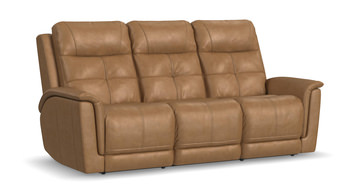
only 2 left in stock!
Ranger Leather Power Reclining Sofa
arrives on 11/17/2026