How to Make a Large Living Room Feel as Considered as a Small One
November 2026
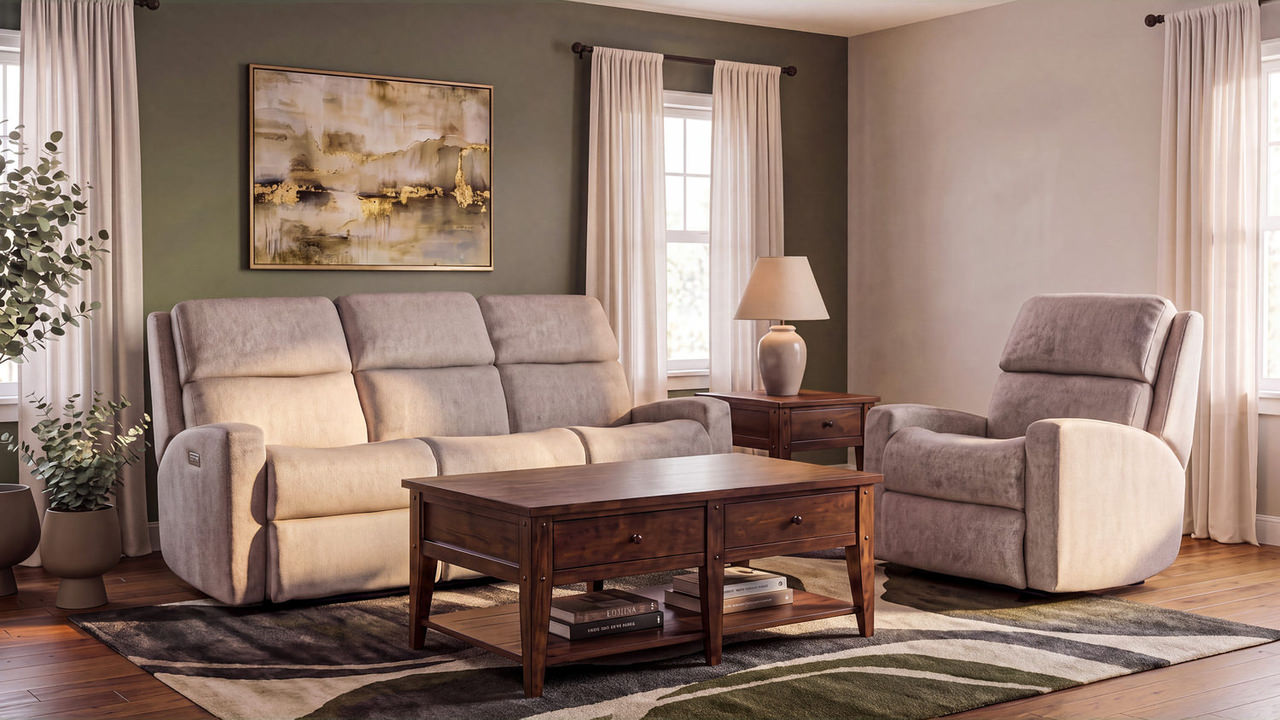
A generous living room is a gift: room to entertain, room to breathe, room for furniture that would feel cramped anywhere else. But that extra square footage comes with its own set of large living room design ideas to master, and they're different from the ones that apply to a cozy space.
In a small room, the walls and doorways sit close enough together that even a slightly undersized sofa or a rug that falls short of the seating area still reads as pulled together. The room's proportions do some of the work for you. In a large room, there's no such safety net, and the same choices don’t work well. Furniture floats. Conversation areas can feel disconnected. The room can read as underfurnished rather than spacious. Here's how to furnish a large living room so it feels just as intentional as a smaller one.
What Furniture Works Best in a Large Living Room?
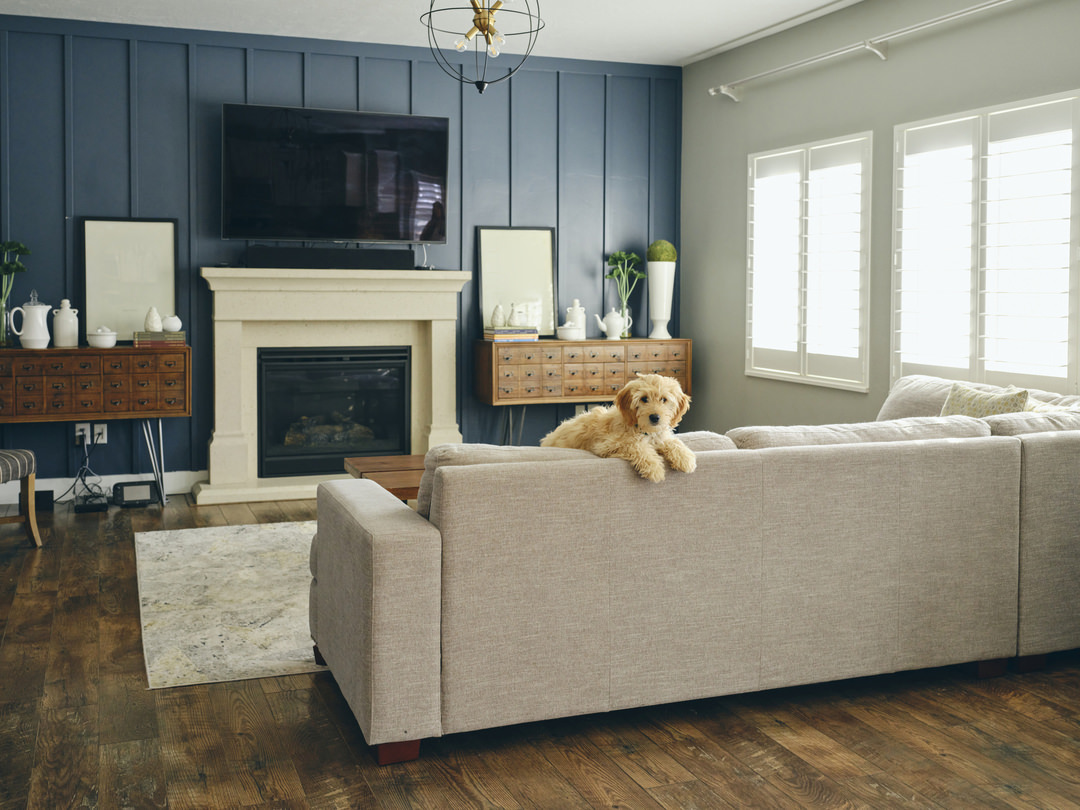
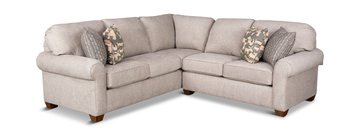
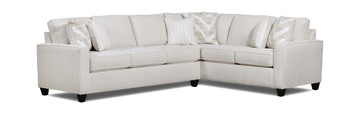
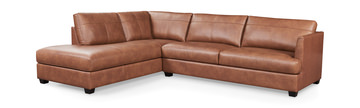
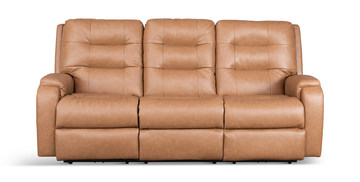
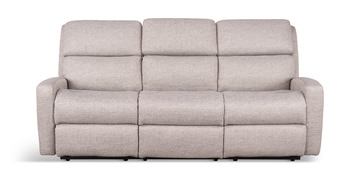
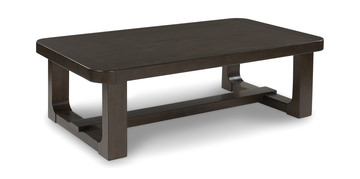
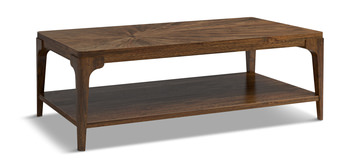
The instinct in a large room is often to add more pieces — an extra armchair here, a second side table there — to fill the volume. A better approach is to go bigger on fewer pieces. A substantial sofa, ideally an L-shaped sectional or a generous three-cushion silhouette, anchors the room in a way that several smaller pieces never will. Pair it with a coffee table sized to match: in a large room, an undersized coffee table can look like an afterthought floating in front of a much bigger sofa. As a rule of thumb, the coffee table should be roughly two-thirds the length of the sofa it’s paired with.
From there, build out rather than in. A pair of oversized swivel chairs opposite the sofa does more for the room than several smaller chairs scattered about, and an accent chest behind the sofa gives a floating arrangement a defined back edge instead of an open, unfinished one. When you're choosing furniture for a large living room, scale is doing more work than quantity. Every piece should feel substantial enough to hold its own.
Should I Use One Large Rug or Two Rugs in a Big Living Room?
It depends primarily on how you're arranging the furniture. A single seating area is best anchored by one generously sized area rug. A second rug would only fragment a grouping that's already unified. However, if you're splitting the room into a primary and secondary zone, give each zone its own rug; stretching one rug across both groupings tends to flatten them into one undifferentiated space rather than reading as two distinct areas.
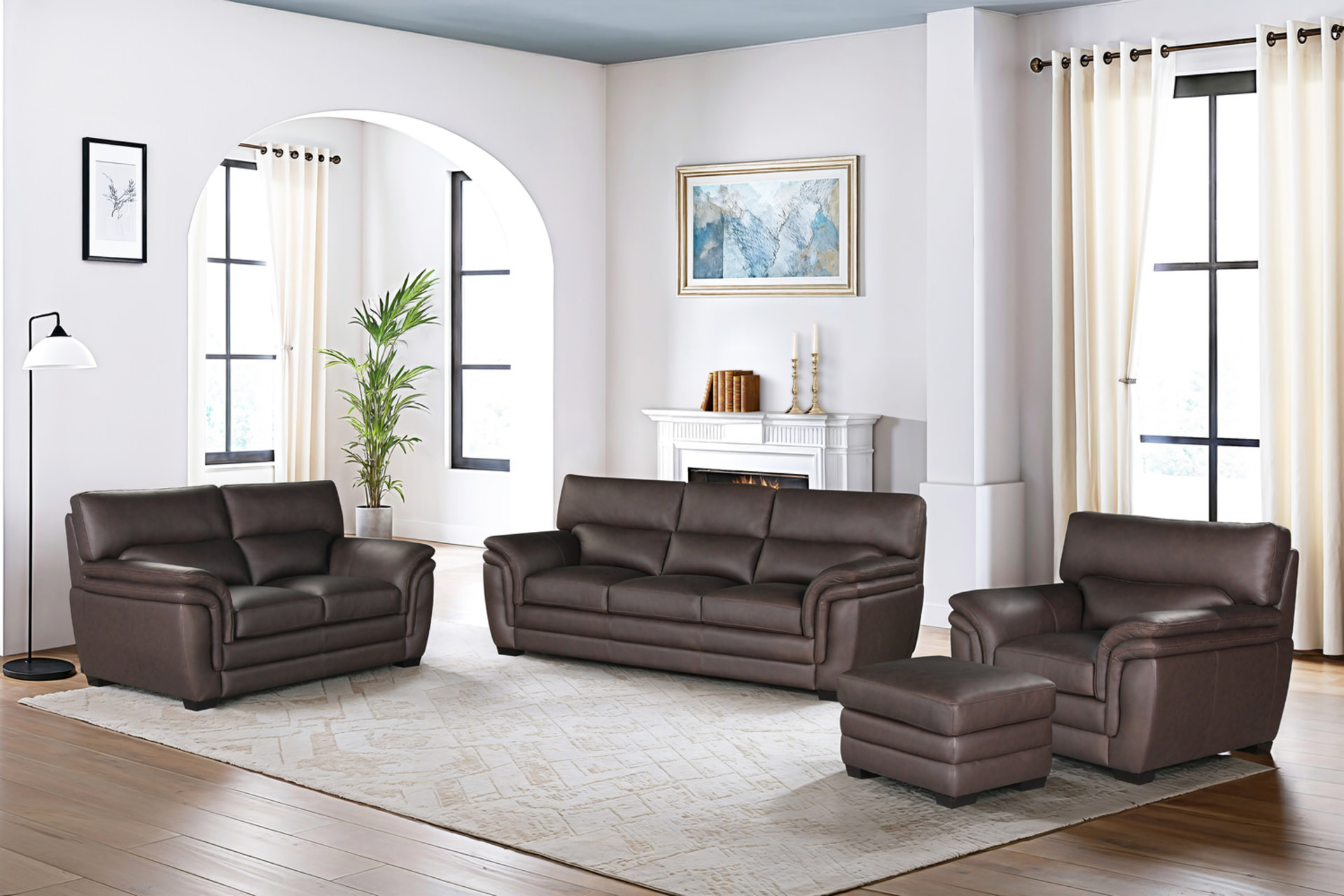
Whichever route you take, size the rug generously. A rug matters more in a large living room than a small one, not less. In a small space, the walls define the seating area; in a large room, the rug often does that job alone, so undersizing it is the fastest way to make an expensive arrangement look unintentional. Aim for at least the front legs of every seating piece on the rug. Ideally all four legs of all pieces should be on the rug in a truly large room. An 8-by-10 that anchors a small room can look like a doormat in a large one; 9-by-12 or 10-by-14 is a more realistic starting point.
How Do I Create Zones in an Open Living Room?
Open, expansive rooms invite you to think beyond a single seating arrangement. Rather than pushing every piece of furniture into one large conversation area, consider splitting the room into two purposeful zones. A primary seating area built around the sofa and a secondary spot for reading, working, or overflow seating during gatherings. Give each zone its own light source, whether that's a floor lamp beside a reading chair or a pendant over a game table, so the two areas feel deliberately separate rather than like one arrangement that trailed off.
It helps to give each zone a distinct purpose before you start placing furniture. A primary zone built for conversation calls for seating that faces inward; a secondary zone for reading or working can face outward toward a window or a bookshelf.
How Do I Arrange Furniture in a Very Large Living Room?
The most common mistake in a large living room is pushing every piece of furniture back against the walls. It's an understandable instinct as it clears the center of the room. However, iit also stretches conversation across a distance that discourages actual interaction. Instead, float your seating arrangement toward the center of the room, leaving breathing room behind the sofa rather than crowding it against the wall.
From there, angle chairs slightly inward rather than lining them up in parallel rows, and keep the distance between facing seats close enough for easy conversation. Roughly eight feet is a comfortable ceiling. Leave clear walking paths on at least two sides of each zone so guests can move through the room without cutting across a conversation in progress.
How Do I Make a Large Living Room Feel Cozy?
Scale and layout get a large room most of the way there, but warmth comes from the details layered on top. Stack your lighting instead of relying on one overhead fixture: a floor lamp near the secondary zone, table lamps flanking the sofa, and a dimmer on any recessed lighting let you bring the room down to an intimate glow in the evening.
Textiles do similar work. A mix of textures across throw pillows and a rug with some depth to its pile keeps a large room from feeling like a showroom. And don't underestimate what personal objects do for scale: a stack of well-loved books, expansive artworks, a plant tall enough to hold its own. These are the finishing touches that make a large living room feel as considered, and as lived-in, as a small one.
A large room rewards confidence: bigger furniture, bolder rugs, and a willingness to break the space into zones rather than one sprawling arrangement. Get those fundamentals right, and a generous living room stops feeling like a challenge to fill and starts feeling like the advantage it actually is.
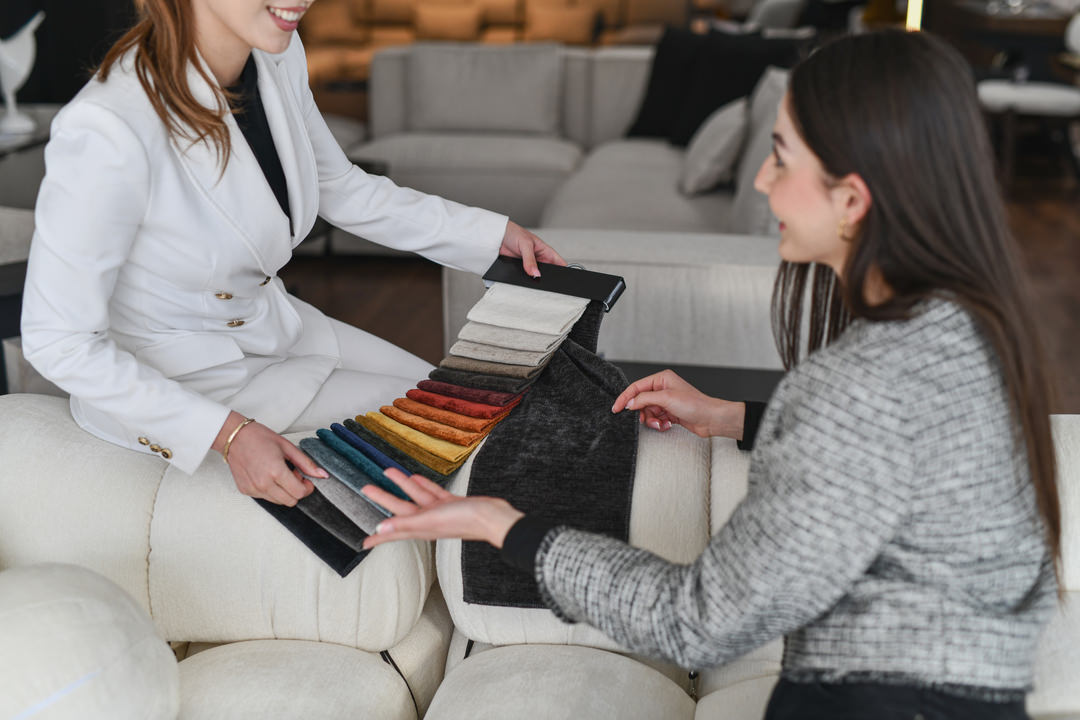
Ready to shop for pieces that fit a large-scale layout? Our living room buying guide walks through sizing, materials, and styles to help you furnish with confidence, or stop by and talk through your space with one of our design consultants. They can help you map out a layout, zones, and rug sizing specific to your room.