How to Choose an Area Rug Color You Won’t Regret in Two Years
June 2026
The color of an area rug is one of the most consequential decisions in a room — and one of the easiest to second-guess two years later. Knowing how to choose area rug color comes down to three strategies, and picking the right one depends on where you’re starting.
How do I choose the right color area rug?
Begin by deciding what role you want the rug to play: anchor the room with a neutral, pull from colors already in the space, or let the rug itself set the palette. Those three strategies lead to different results, and the right one depends on how much of the room is already in place.
If your furniture and walls are already committed, work from what you have. If you’re starting fresh or redecorating around the rug, you have more latitude — and a rug with strong color or pattern can be a useful starting point rather than an afterthought.
Strategy 1: Anchor with a neutral
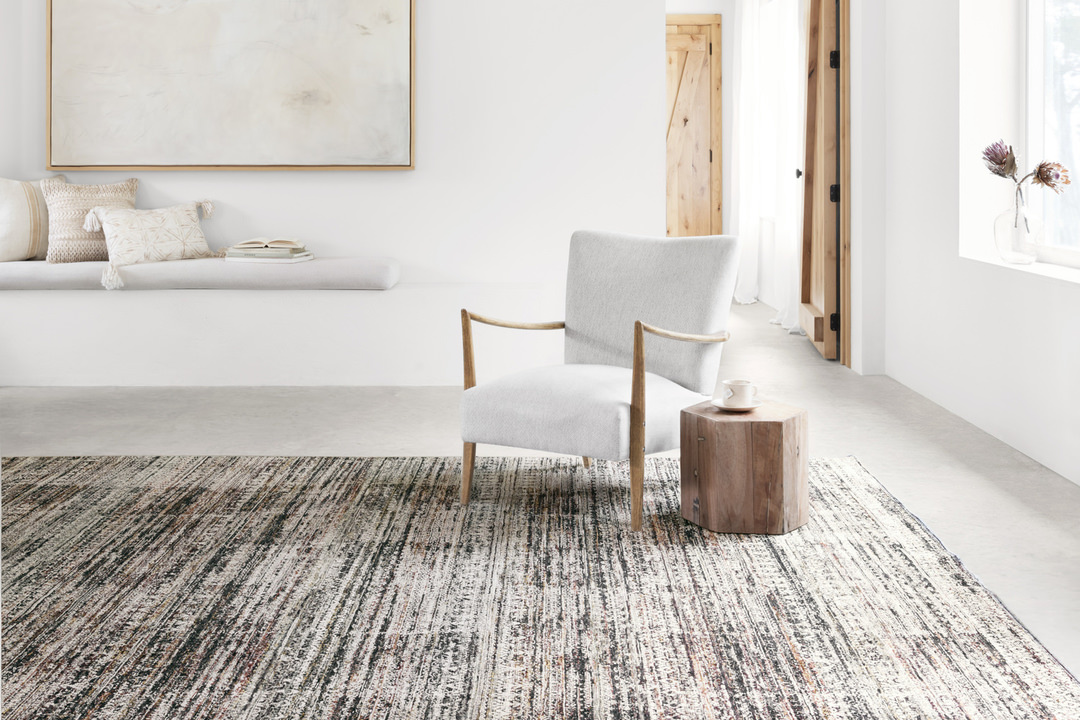
A rug in warm ivory, taupe, greige or soft charcoal gives the room a grounded foundation without competing with anything else. Neutral rugs have the longest staying power. They don’t date the way a trendy color can, and they survive furniture changes and repainted walls. This is the lowest-risk path if you’re unsure.
However, the wrong neutral tone can make a room feel flat. A warm-toned room needs a warm neutral; a cool-toned room a cool one. Putting a stark white rug in a room with honey-toned floors, for example, can read as a mismatch even if both are technically neutral.
Strategy 2: Pull from existing accent colors
If your room already has a throw pillow, curtain or piece of art with a color you love, a rug that picks up that tone can tie the room together. This strategy works best when the accent color is already present in at least two other places. Otherwise the rug can look like it wandered in from a different room.
Keep saturation in check. A deeply saturated color that looks great on a small pillow can feel overwhelming when it covers 60 square feet of floor. Look for rugs that carry the color in a muted or tonal version rather than a direct match.
Strategy 3: Start with the rug
If you’re building the room from scratch or doing a significant refresh, choosing the rug first is the most reliable approach. It’s easier to match paint, pillows and furniture to a rug than to find a rug that works with everything you’ve already committed to. Pick a rug you genuinely love, then build outward from its colors.
Should an area rug be lighter or darker than the floor?
Either can work, but the contrast between rug and floor affects how much visual weight the rug carries. Here are the most common floor and rug color pairings and what each tends to produce.
| Floor Tone | Rug Tone | Effect |
| Light wood or light tile | Darker rug | Grounds the space; adds definition |
| Light wood or light tile | Similar light tone | Airy and open; works best with texture contrast |
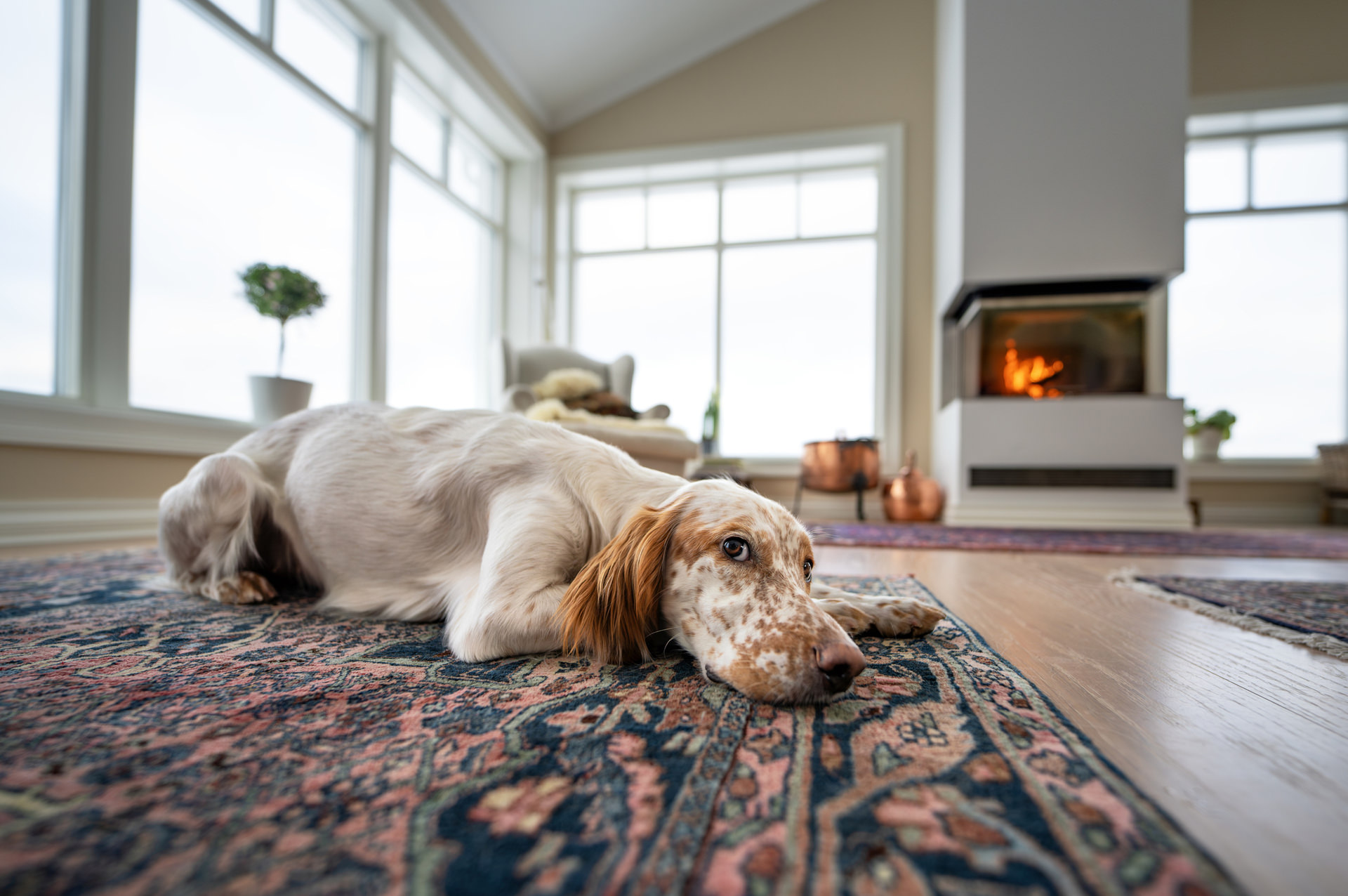
| Dark wood or dark tile | Lighter rug | Lifts the room; creates contrast that reads as intentional |
| Dark wood or dark tile | Similar dark tone | Cozy and layered; risk of muddiness without enough contrast |
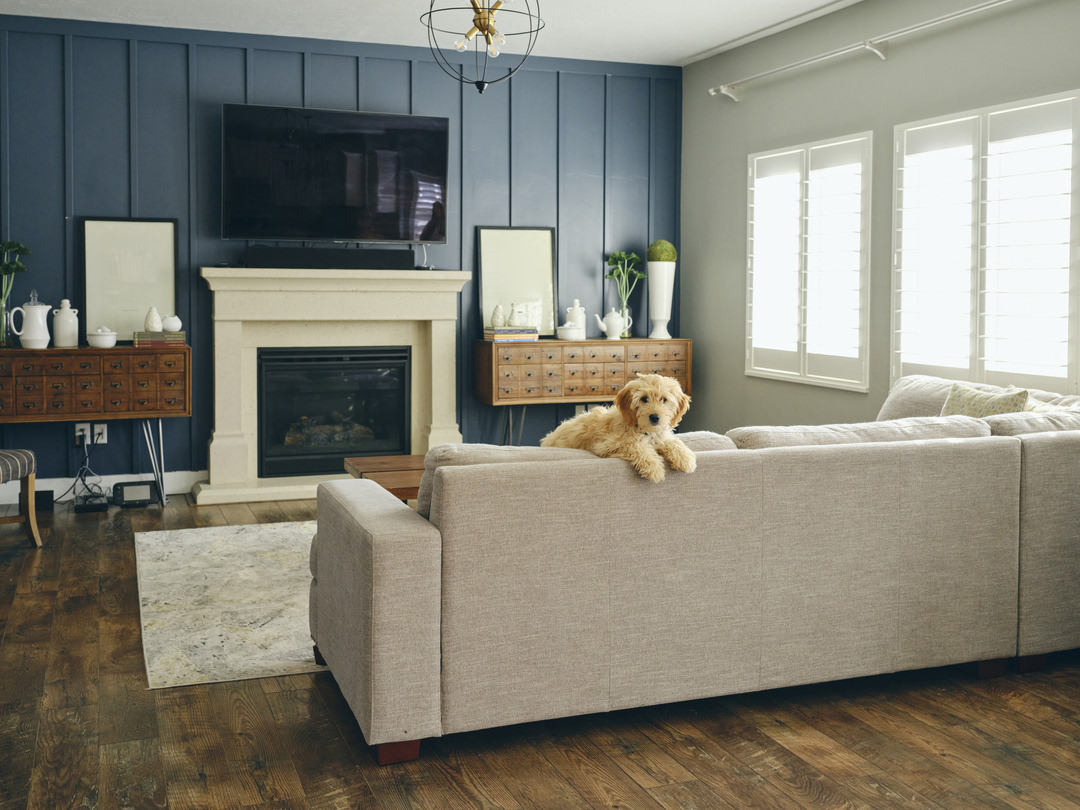
| Medium or warm wood | Warm neutral rug | Harmonious and easy to live with long-term |
As a general rule, some contrast between floor and rug makes the rug feel intentional rather than accidental. A rug that is nearly identical in value to the floor can disappear.
What rug color makes a room look bigger?
Light colors expand a room visually; dark colors contract it. A rug in a pale, low-contrast tone — cream, light gray, soft sage — tends to make a room feel more open and continuous, especially if it’s close in tone to the floor and walls.
Pattern also plays a role. A low-contrast pattern with a lighter ground color seems more open than a bold, high-contrast design. If your room is small and you want it to feel larger, a simple tone-on-tone pattern in a light color is usually the best area rug color guide choice.
Should a rug match the sofa or the walls?
A rug doesn’t need to match either. In fact, a direct match to the sofa often reads as too coordinated, and matching the walls can make the floor plane disappear. The goal is relationship, not repetition.
The rug should share at least one color family with the sofa and one with the walls, without directly copying either. In practice, that usually means a rug with a multi-tone palette — a pattern or texture that carries a neutral base with an accent tone that echoes something already in the room.
The hold test: confirm before you commit
Color looks different in every room. Lighting, floor tone and wall color all shift the way a rug reads in the space. The most reliable way to choose a rug color is to bring something from your room for comparison_. A_ fabric swatch from the sofa, a paint chip from the wall or a photo taken in natural light.
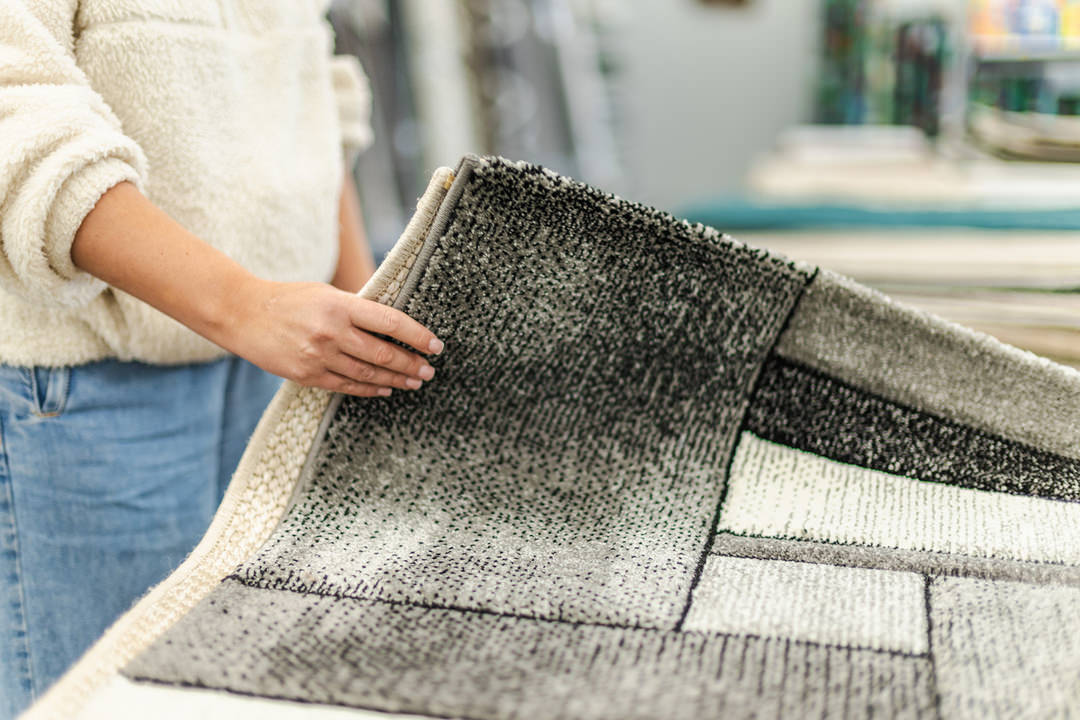
Hold the swatch or chip directly against the rug in the store, ideally in a section with lighting similar to your room. If you’re shopping online, order a sample or request a return window long enough to test the rug before committing. This one step eliminates most rug color regret.
Not sure where to start? The team at Hennen’s Furniture can help you work through the options based on your room’s existing colors.
Frequently Asked Questions
What are the best rug colors for a living room?
The choice depends on the room’s lighting and existing palette, but warm neutrals — ivory, taupe and soft greige — work in the widest range of spaces and hold up longest over time. If the room gets strong natural light, you have more flexibility to go deeper or add color without the space feeling heavy.
Neutral area rug vs. colorful: which is better?
This is ultimately a question of how much design flexibility you want to preserve. Neutrals adapt as the room evolves; a colorful rug commits you to a palette. If you tend to redecorate or swap out furniture, a neutral is the safer long-term investment. If you want more personality, a rug with color or pattern can anchor the space in a way a neutral won’t.
Ready to find the right rug?
Color is just one piece of the puzzle. Hennen’s area rug buying guide covers all aspects of the full decision, including size, material, pile height and placement. A Hennen team member can help you apply this information to make the ideal choice.